18 Living Room Layout Ideas for Better Space and Flow
Struggling to arrange your living room in a way that feels open, functional, and visually appealing? You’re not alone. Many spaces end up feeling cramped, awkward, or disconnected simply because the layout isn’t working.
The truth is, even the most beautiful furniture won’t look right if the layout disrupts flow or blocks natural movement. Whether you’re dealing with a small apartment or a large open-concept space, the right layout can completely transform how your living room feels and functions.
In this guide, you’ll discover living room layout ideas for better space and flow, designed to help you create a room that feels balanced, intentional, and easy to move through, while still looking stylish and Pinterest-worthy.
Idea #1: Centered Sofa Layout for Balanced Symmetry
A centered sofa layout is one of the most effective ways to create visual balance in your living room. By positioning your sofa directly across from a focal point—like a TV, fireplace, or statement wall, you instantly establish structure and symmetry within the space.
This layout works especially well in modern and contemporary interiors where clean lines and order are key. It naturally draws attention to the center of the room while making everything feel aligned and intentional.
To enhance this setup, place matching side tables or chairs on either side of the sofa. This creates a mirrored effect that feels polished without being overly formal. A central coffee table anchors the arrangement and keeps the space cohesive.
The best part is how easy it is to apply. Start by identifying your focal point, align your sofa with it, and build outward with supporting furniture. This layout improves both aesthetics and flow by keeping pathways clear and predictable.
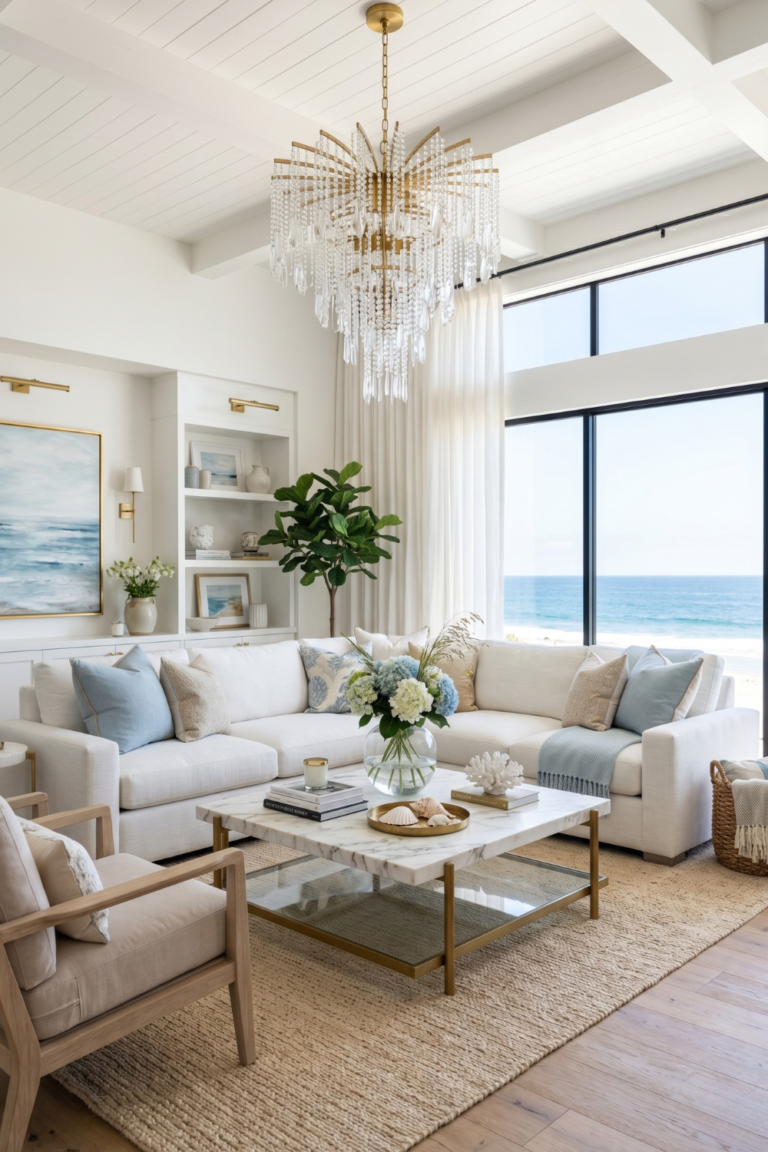
Idea #2: L-Shaped Sectional for Open Flow Living
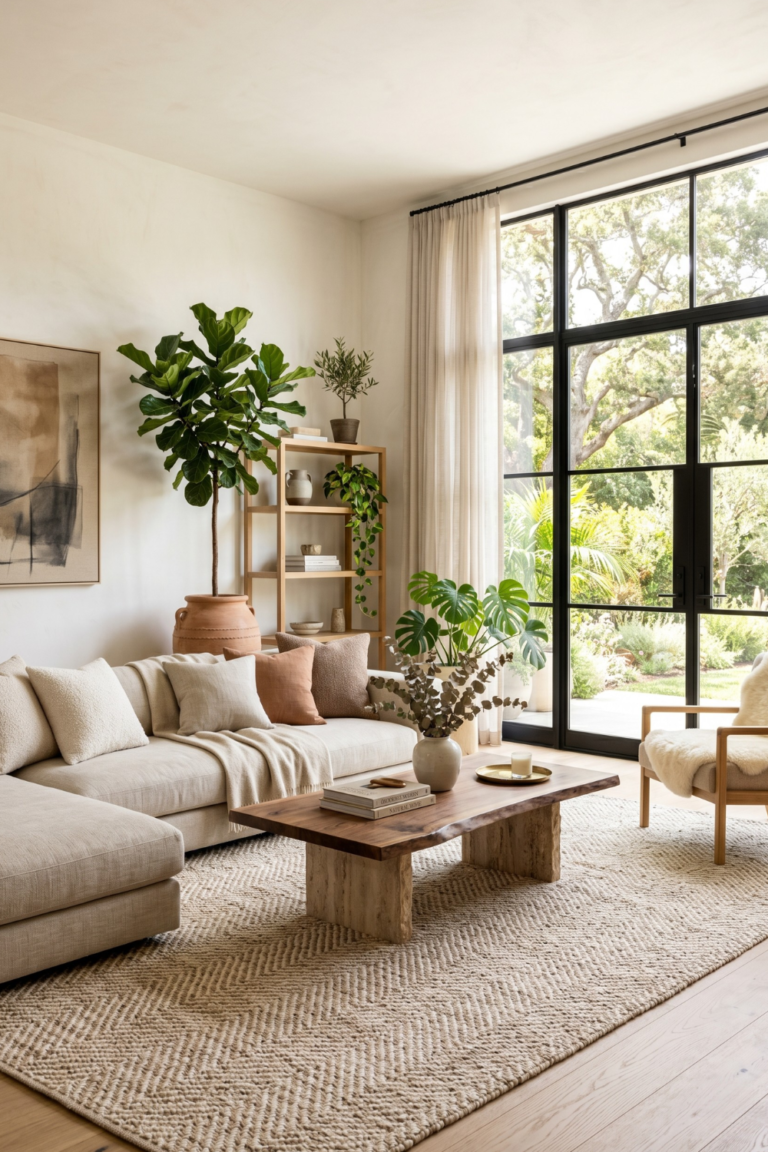
An L-shaped sectional is perfect for maximizing seating while maintaining an open, airy feel. Instead of breaking the room into multiple pieces, this layout creates a natural boundary that defines the living area without closing it off.
This approach works beautifully in open-concept homes or apartments where the living room blends into dining or kitchen spaces. The sectional subtly separates zones while still allowing easy movement around it.
To make the most of this layout, position the longer side of the sectional along a wall and let the shorter side extend into the room. This creates a cozy corner while keeping the rest of the space open.
Pair it with a round or oval coffee table to soften the angles and improve walkability. The result is a layout that feels inviting, functional, and perfectly optimized for both lounging and socializing.
Idea #3: Floating Furniture Layout for Airy Design
Floating furniture, placing pieces away from walls, can instantly make your living room feel more spacious and thoughtfully designed. Instead of pushing everything to the edges, this layout creates a central conversation zone that feels intentional and dynamic.
This style is commonly seen in high-end and organic modern interiors because it adds depth and dimension to the room. It also improves flow by creating clear pathways around the furniture rather than cluttering the perimeter.
To achieve this look, pull your sofa slightly away from the wall and place a console table behind it. Add chairs facing the sofa to create a balanced seating arrangement. A large area rug helps define the space and keeps everything visually connected.
This layout works best in medium to large rooms, but even smaller spaces can benefit from slight floating adjustments. It gives your living room a more curated, designer feel while improving how people move through the space.
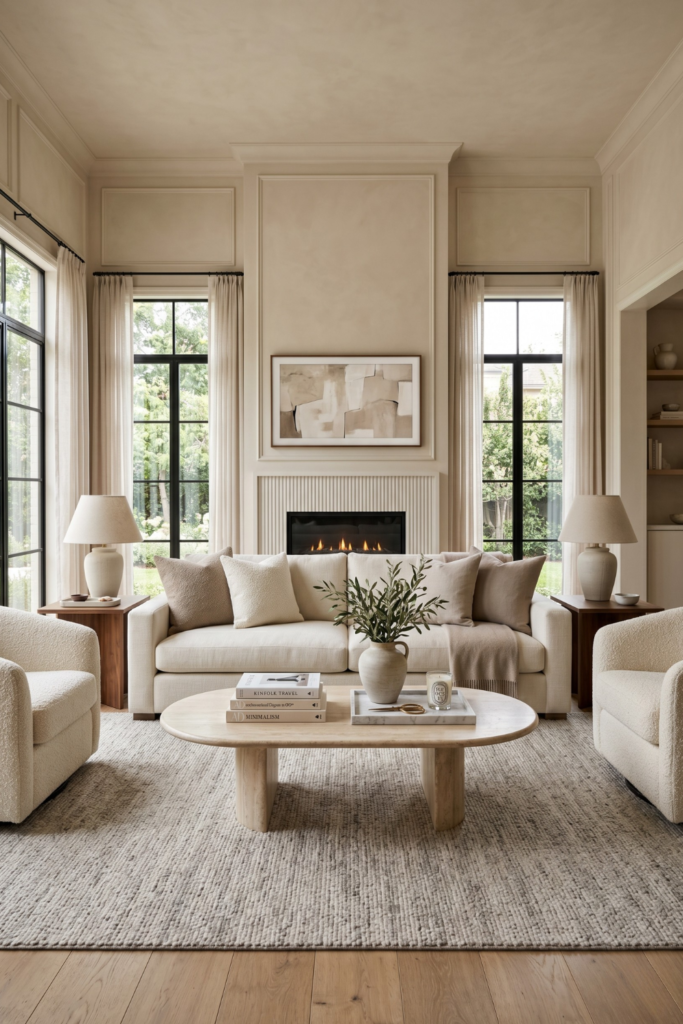
Idea #4: Minimalist Linear Layout for Clean Flow
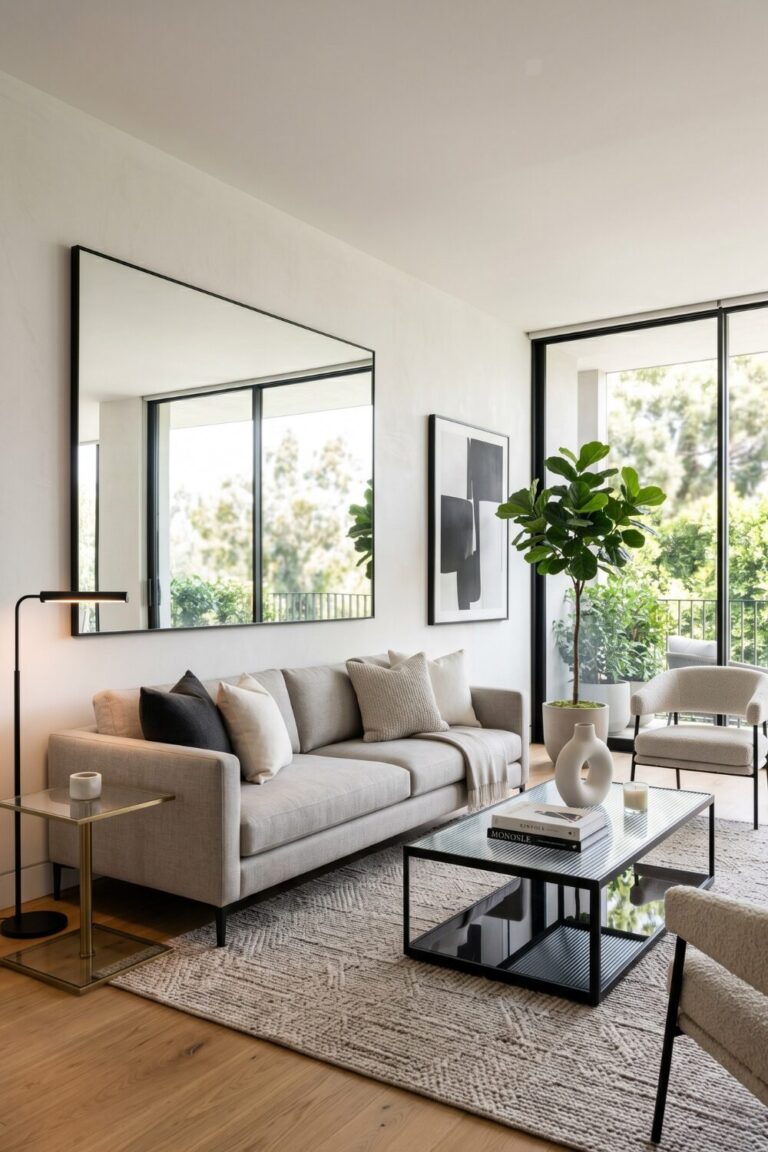
A minimalist linear layout focuses on simplicity and clarity. Furniture is arranged in a straight line, often along a wall, creating a clean and uncluttered look that enhances movement and openness.
This layout is ideal for small living rooms or narrow spaces where every inch matters. By keeping furniture aligned, you avoid blocking pathways and make the room feel longer and more spacious.
Neutral colors, low-profile furniture, and minimal decor are key elements here. A sleek sofa, a simple coffee table, and a wall-mounted TV are often all you need to create a functional yet stylish setup.
To apply this layout, choose furniture with slim silhouettes and avoid overcrowding. The goal is to let the space breathe while maintaining a cohesive and modern aesthetic.
Idea #5: Conversation Circle Layout for Social Spaces
If your goal is to create a warm and engaging environment, a conversation-focused layout is the way to go. This setup arranges seating in a circular or semi-circular formation, encouraging interaction and connection.
This layout works beautifully in boho, transitional, or cozy contemporary interiors where comfort and intimacy are key. It’s perfect for families or anyone who loves hosting guests.
To achieve this, position sofas and chairs facing each other with a central coffee table or ottoman. Keep distances close enough for easy conversation but not cramped.
Layer in soft textures like rugs, cushions, and throws to enhance the inviting atmosphere. This layout not only improves functionality but also transforms your living room into a social hub.
Idea #6: Zoned Layout for Multi-Functional Living Rooms
In modern homes, living rooms often serve multiple purposes, from relaxing to working or even dining. A zoned layout helps you divide the space into functional areas without using walls.
This approach is especially useful in apartments or open-plan homes. By using rugs, furniture placement, and lighting, you can visually separate different zones while maintaining flow.
For example, you might have a seating area centered around a sofa and coffee table, and a small reading nook with an accent chair and lamp nearby. Each zone feels distinct yet connected.
To apply this, think of your living room as a combination of mini spaces. Define each area clearly but keep pathways open to ensure smooth movement between zones.
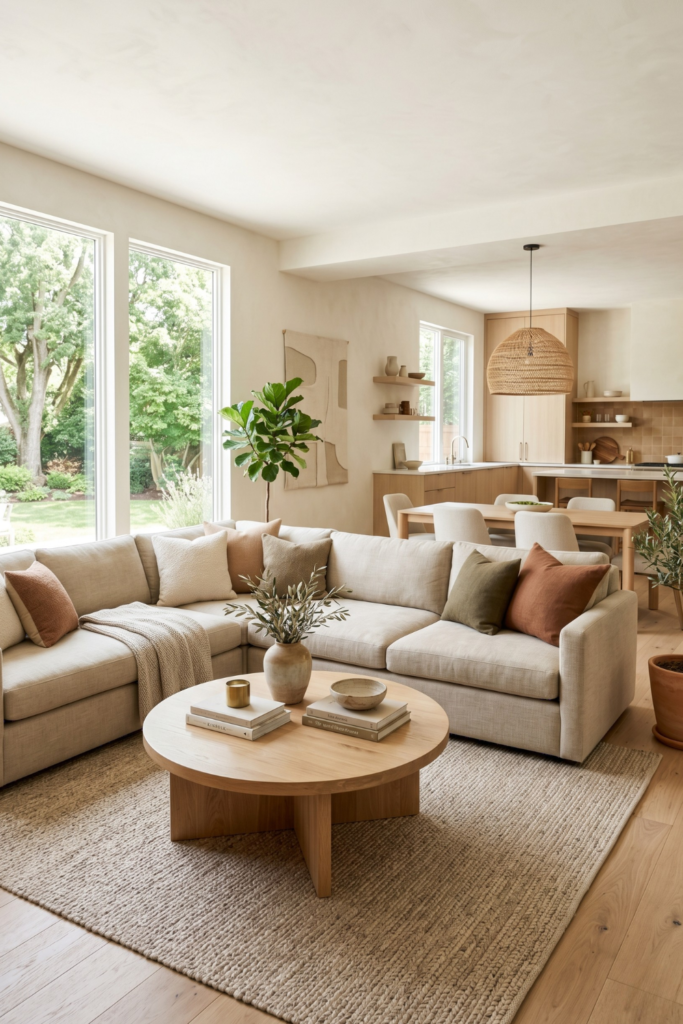
Idea #7: Diagonal Layout for Dynamic Energy
A diagonal layout might not be the first thing you think of, but it can completely change the feel of your living room. By angling your furniture, you introduce movement and visual interest that breaks away from traditional setups.
This layout works well in contemporary or eclectic spaces where creativity and uniqueness are encouraged. It’s especially useful for rooms with awkward shapes or limited wall space.
To try this, place your sofa at a slight angle and arrange other pieces around it. This creates a more dynamic flow and can make the room feel larger than it actually is.
The key is balance—avoid overcomplicating the layout. Keep pathways clear and ensure that the angled placement enhances rather than disrupts movement.
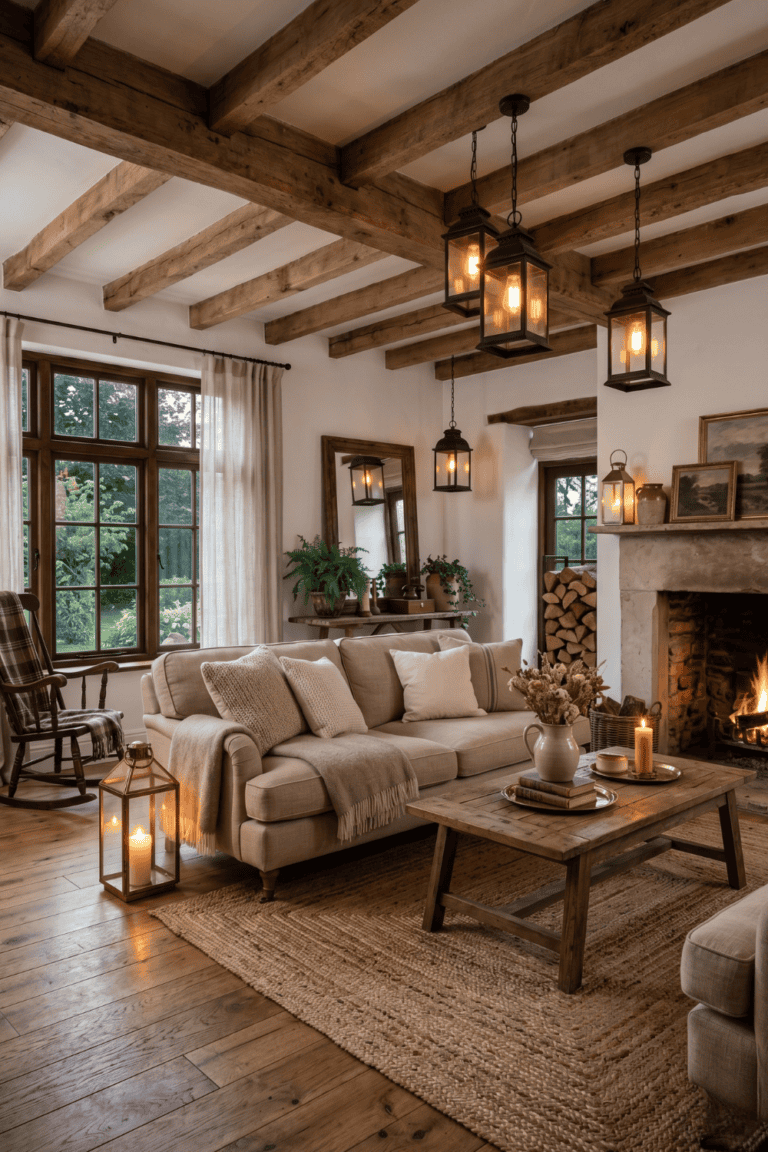
Idea #8: Fireplace-Centered Layout for Cozy Focus
A fireplace naturally becomes the focal point of any living room, and designing your layout around it creates a warm and inviting atmosphere.
This layout is perfect for rustic, farmhouse, or traditional interiors where comfort and charm are essential. Seating is arranged to face the fireplace, making it the heart of the space.
You can place a sofa directly opposite the fireplace with chairs on either side to create a balanced arrangement. A coffee table in the center ties everything together.
To enhance the look, incorporate warm textures like wood, wool, and soft fabrics. This layout not only improves flow but also creates a space that feels grounded and welcoming.
Idea #9: Open Pathway Layout for Easy Movement
One of the most important aspects of a good living room layout is ensuring smooth movement. An open pathway layout prioritizes clear walkways, making the space feel more functional and less cluttered.
This approach is especially useful in busy households or smaller spaces where traffic flow matters. By keeping pathways unobstructed, you create a room that feels more spacious and user-friendly.
Arrange furniture in a way that leaves natural walking paths between key areas. Avoid placing large pieces in high-traffic zones.
This layout may seem simple, but it has a huge impact on how the space feels and functions. It’s all about making the room easy to navigate while still looking stylish.
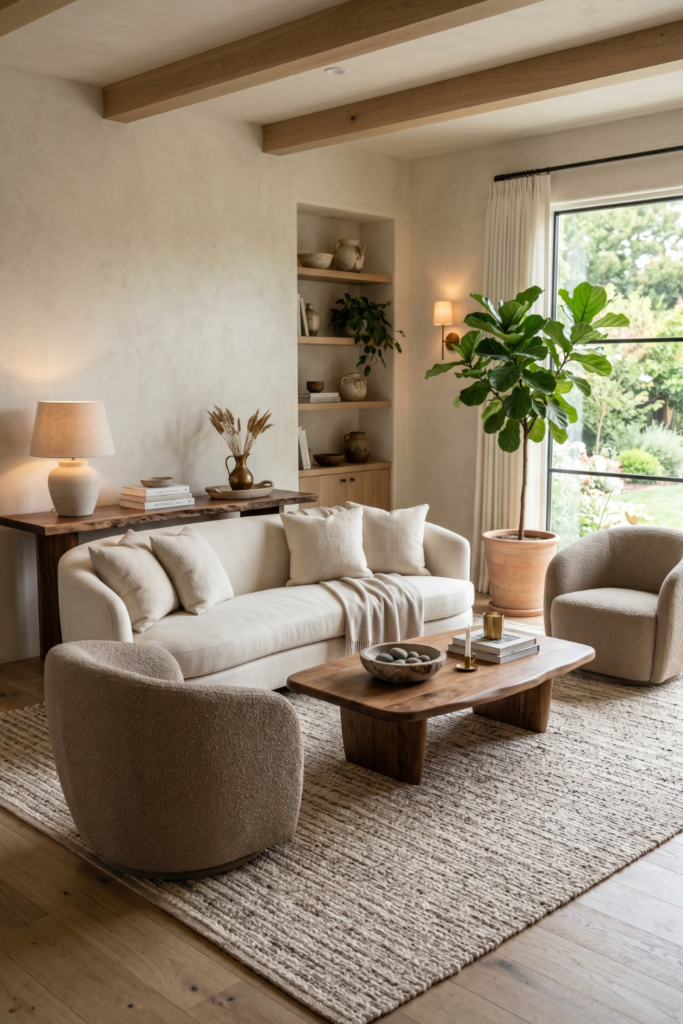
Idea #10: U-Shaped Layout for Ultimate Comfort
A U-shaped layout is designed to maximize comfort and create an immersive seating experience. By arranging sofas and chairs in a U formation, you form a cozy enclosure that feels perfect for relaxing, watching TV, or entertaining guests.
This layout works particularly well in larger living rooms where you have enough space to accommodate multiple seating pieces without crowding the area. It’s a popular choice in modern luxury and transitional interiors because it feels both structured and inviting.
To create this layout, position a main sofa facing the focal point, then add two additional seating pieces—such as armchairs or a loveseat, on either side. This forms a complete, balanced arrangement that encourages conversation while maintaining a clear center.
The key element is a central coffee table or ottoman that anchors the entire setup. Keep enough space between furniture pieces to maintain flow, ensuring that the room doesn’t feel enclosed or tight.
Idea #11: Scandinavian Open Layout for Light and Simplicity
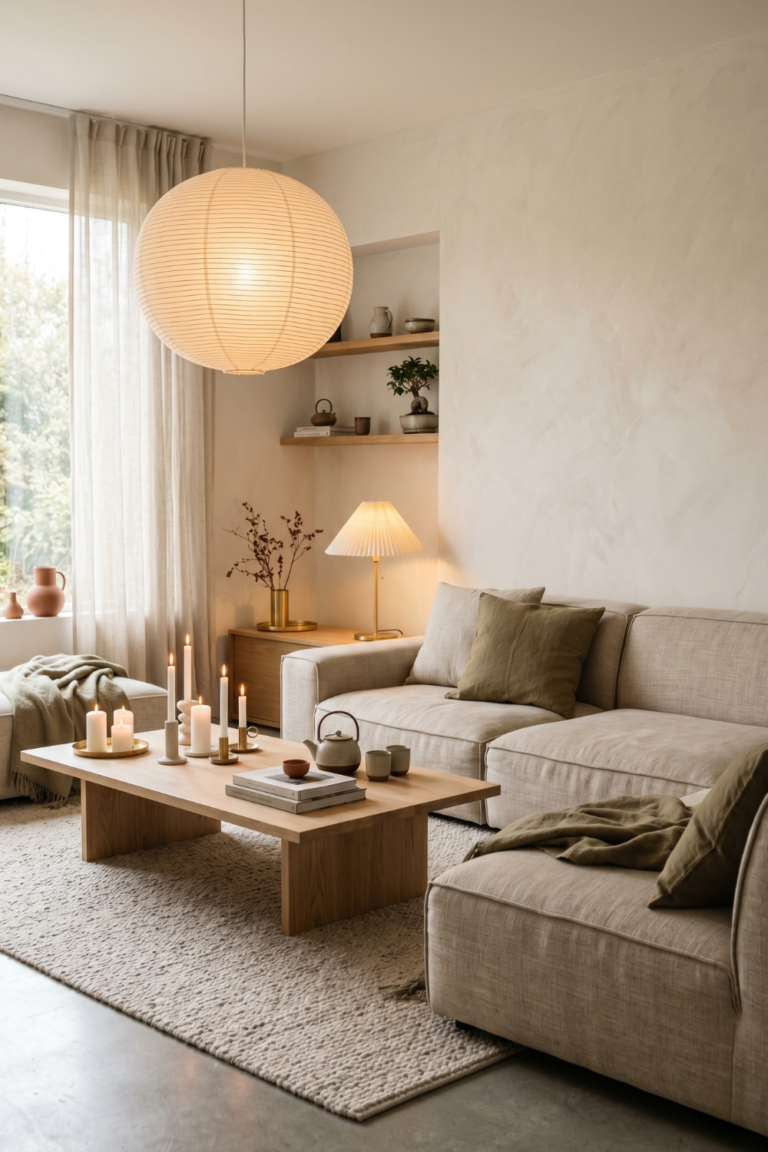
A Scandinavian-inspired layout focuses on openness, natural light, and simplicity. Furniture is arranged to avoid blocking windows, allowing light to flow freely throughout the space.
This layout is ideal for small to medium living rooms where brightness can make a big difference. By keeping the arrangement minimal and intentional, you create a space that feels calm and visually expansive.
Use light-toned furniture, soft neutral colors, and natural materials like wood and linen. Position seating in a way that maintains open sightlines, and avoid heavy or bulky pieces that can disrupt flow.
To apply this layout, prioritize functionality and simplicity. Every piece should serve a purpose while contributing to a clean and airy aesthetic that enhances movement and comfort.
Idea #12: TV-Focused Layout for Entertainment Spaces
If your living room is primarily used for watching TV, a TV-focused layout ensures maximum comfort and visibility. This setup places seating directly oriented toward the screen, creating an optimal viewing experience.
This layout is common in modern and contemporary homes where entertainment plays a central role. It’s practical, efficient, and easy to implement in both small and large spaces.
Start by positioning your sofa directly facing the TV, then add additional seating at slight angles to maintain good sightlines. Keep the distance between seating and the screen comfortable—not too close, not too far.
To improve flow, avoid placing furniture behind viewing areas that could block movement. This layout keeps everything functional while still allowing for a stylish and cohesive design.
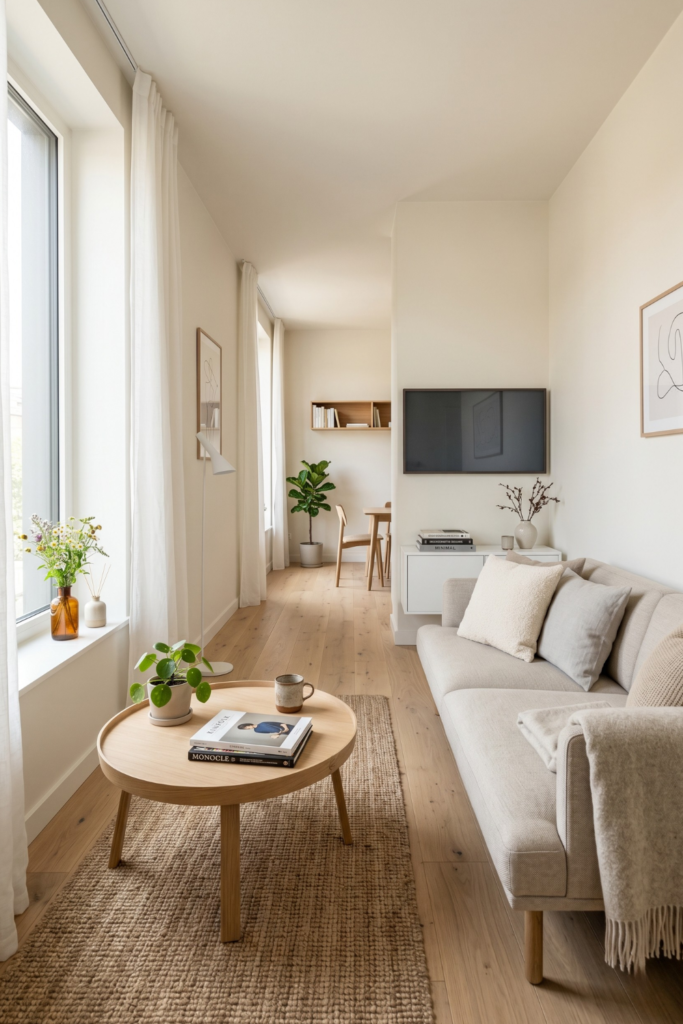
Idea #13: Boho Layered Layout for Relaxed Flow
A boho-inspired layout embraces a relaxed and slightly unconventional arrangement that feels effortless and lived-in. Instead of rigid structure, this style focuses on layering textures and creating a free-flowing environment.
This layout works beautifully in creative spaces where personality and comfort are key. It’s less about perfect alignment and more about how the space feels when you’re in it.
To achieve this look, mix different seating options like a sofa, floor cushions, poufs, and accent chairs. Arrange them loosely around a central rug to create a casual gathering area.
Layer rugs, textiles, and decor to add depth and warmth. The result is a layout that feels inviting, unique, and full of character while still maintaining a natural flow.
Idea #14: Narrow Room Layout for Long Spaces
Long and narrow living rooms can be challenging, but the right layout can make them feel balanced and functional. The key is to arrange furniture in a way that follows the shape of the room without making it feel like a hallway.
This layout works best in apartments or older homes where room proportions are not ideal. By aligning furniture along one side and keeping pathways clear, you create a more usable and comfortable space.
Use a slim sofa, narrow coffee table, and compact chairs to avoid overcrowding. Position furniture parallel to the longest wall to maintain flow and visual harmony.
To enhance the layout, incorporate vertical elements like shelves or artwork to draw the eye upward. This helps balance the proportions and makes the room feel more dynamic.
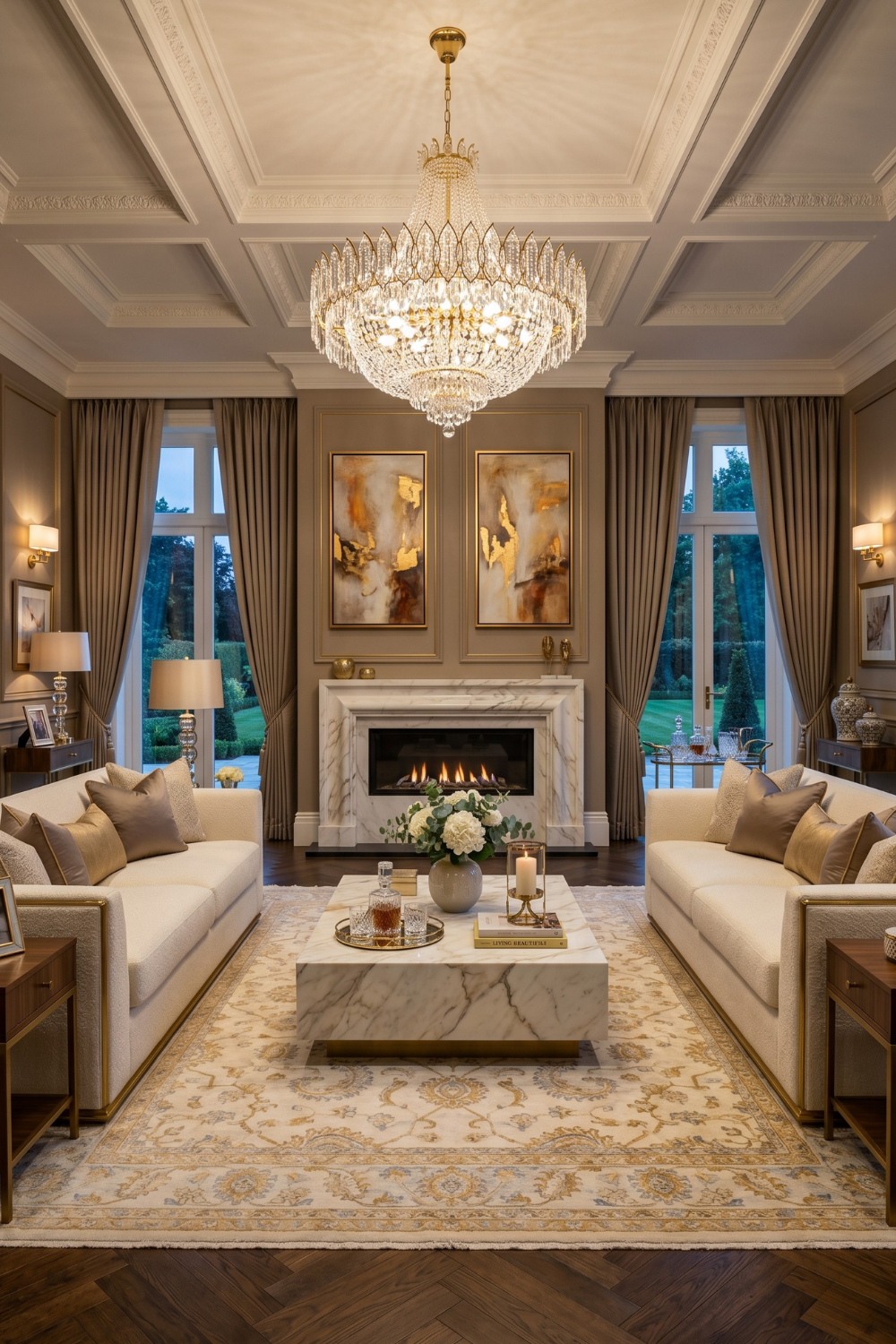
Idea #15: Luxury Symmetrical Layout for High-End Aesthetic
A luxury symmetrical layout is all about precision, balance, and elegance. Furniture is arranged in a mirrored fashion, creating a polished and refined look that feels straight out of a design magazine.
This layout is ideal for larger living rooms or formal spaces where aesthetics are just as important as functionality. It’s commonly seen in high-end and contemporary interiors.
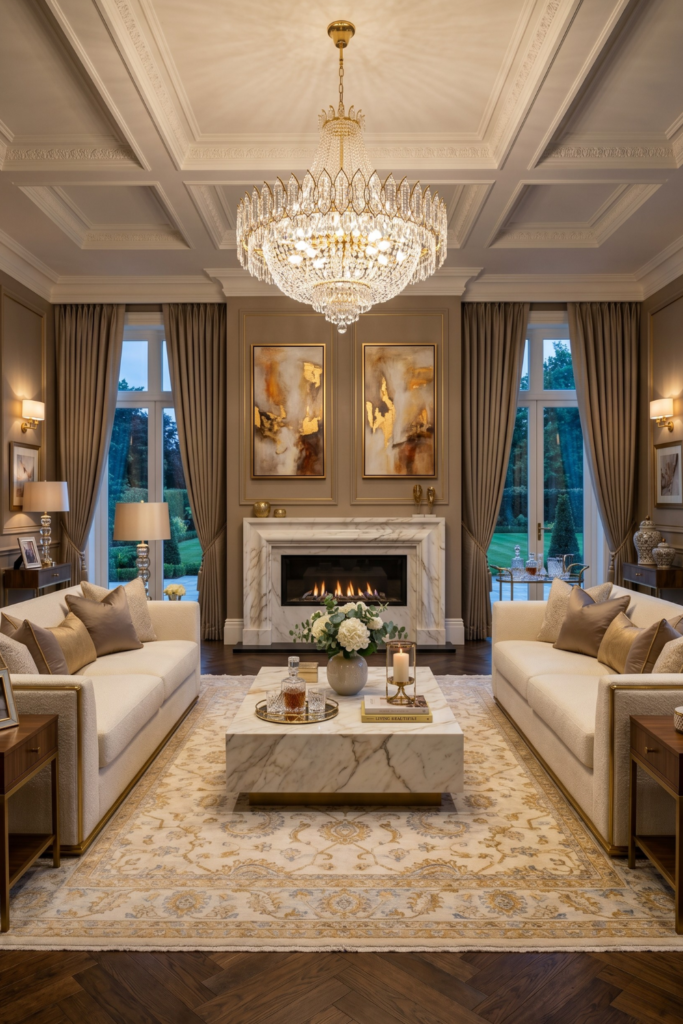
To create this look, start with a central focal point, such as a statement coffee table or chandelier and arrange identical sofas or chairs on either side. Matching decor elements enhance the symmetry and elevate the overall design.
Keep pathways clear and proportions balanced to maintain flow. This layout not only looks stunning but also creates a sense of order and harmony within the space.
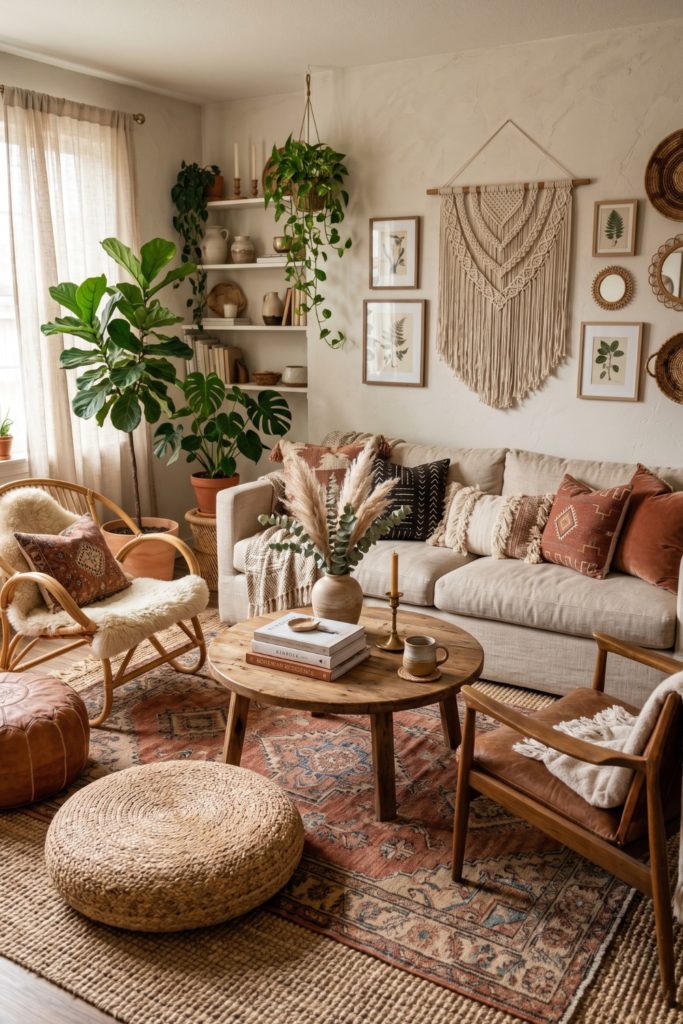
Idea #16: Corner-Focused Layout for Small Spaces
When space is limited, utilizing corners effectively can make a huge difference. A corner-focused layout maximizes every inch by positioning key furniture pieces in unused areas.
This layout is perfect for small apartments or compact living rooms where efficiency is essential. By anchoring your seating in a corner, you free up more open space for movement.
Use an L-shaped sofa or a compact sectional to fit snugly into the corner. Pair it with a small coffee table and minimal decor to avoid clutter.
To enhance the effect, keep the rest of the room open and uncluttered. This layout creates a sense of spaciousness while still providing comfortable seating and functionality.
Idea #17: Multi-Focal Layout for Balanced Design
In some living rooms, there isn’t just one focal point, there might be a TV, a fireplace, and a window view. A multi-focal layout helps balance these elements without making the room feel chaotic.
This layout works well in modern homes where multiple features compete for attention. The goal is to create a layout that acknowledges each focal point while maintaining harmony.
Arrange seating at angles that allow visibility to multiple features. For example, a sofa might face the TV while chairs are angled toward a fireplace.
The key is balance, ensure that no single element dominates the space. This layout creates a dynamic yet cohesive environment that feels thoughtfully designed.
Idea #18: Organic Modern Layout for Natural Flow
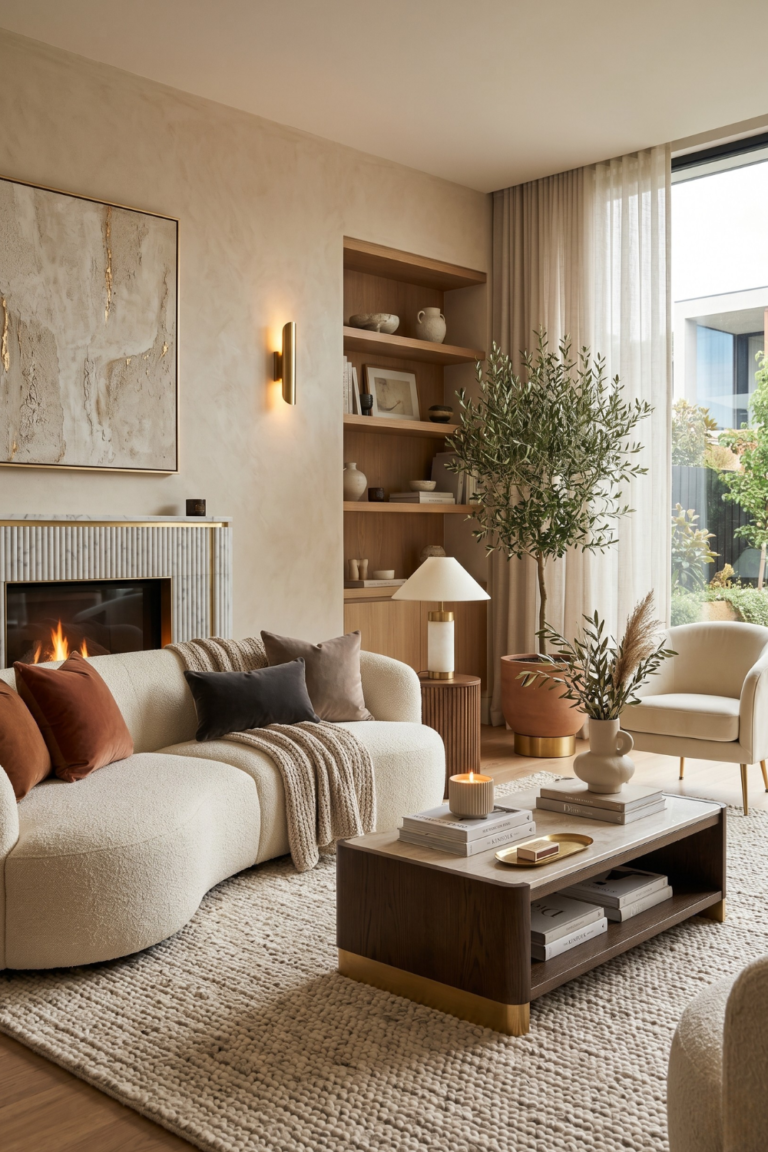
An organic modern layout blends clean lines with natural elements to create a soft, flowing environment. Furniture is arranged to feel effortless and connected to the surrounding space.
This layout is perfect for those who want a modern look without it feeling too rigid or cold. It’s especially popular in Pinterest-worthy interiors because of its calming and elevated aesthetic.
Use curved furniture, neutral tones, and natural materials like wood and stone. Arrange pieces in a way that feels intuitive rather than overly structured.
To apply this layout, focus on creating smooth transitions between areas. Avoid harsh lines or overcrowding, and let the space feel open and breathable.
Conclusion
A well-planned living room layout has the power to completely transform your space, not just visually, but functionally. Whether you prefer a structured symmetrical design, a relaxed boho arrangement, or a minimalist open layout, the key is to create balance and allow movement to feel natural.
By choosing layouts that enhance flow and make the most of your space, you can turn even the most challenging room into a stylish and comfortable environment. Don’t be afraid to experiment, rearrange, and refine until your living room feels just right for your lifestyle.