24 Apartment Living Room Ideas That Feel Bigger and Brighter
Struggling to make your apartment living room feel open instead of cramped? You’re not alone. Small living spaces often feel cluttered, dim, and visually overwhelming especially when natural light is limited or furniture feels oversized.
The good news is that the right design choices can completely transform your space. With smart layouts, light-enhancing color palettes, and intentional decor, even the smallest apartment living room can feel airy, bright, and beautifully styled.
In this guide, you’ll discover apartment living room ideas that not only maximize space but also elevate your home’s aesthetic. Whether you love minimalist calm, cozy textures, or modern elegance, these ideas will help you create a living room that feels bigger, brighter, and effortlessly inviting.
Idea #1: Soft Neutral Color Palette for an Airy Foundation
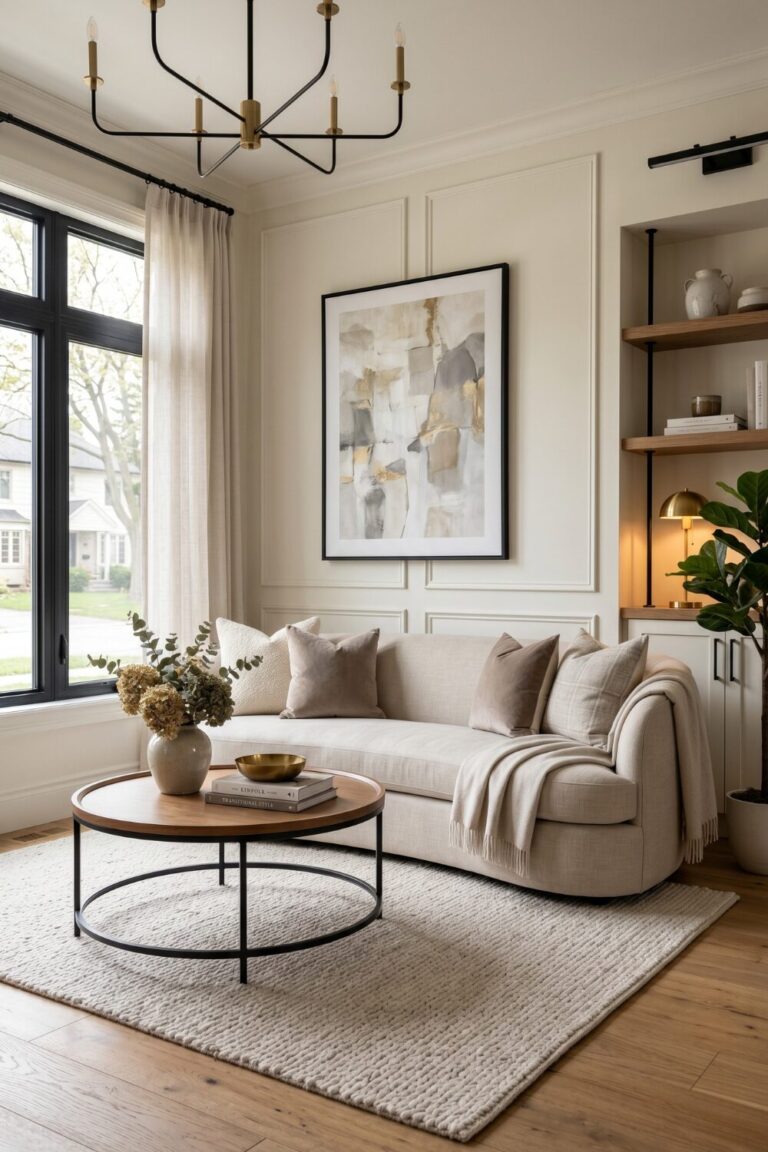
A soft neutral color palette is one of the most powerful ways to visually expand your apartment living room. Shades like warm white, beige, soft taupe, and light gray create a seamless, open feel that reflects light rather than absorbing it.
These tones work beautifully because they reduce visual clutter and allow the eye to move freely across the space. Instead of sharp contrasts, the room feels cohesive and calm, which naturally makes it appear larger. This approach is especially effective in apartments with limited square footage.
To apply this idea, start with your walls and larger furniture pieces like sofas and rugs. A cream or off-white sofa paired with a light textured rug instantly brightens the room. Then layer subtle variations through cushions and throws to add depth without disrupting the airy aesthetic.
Key elements include linen upholstery, light wood finishes, and soft woven textures. This style works particularly well in minimalist, Scandinavian, and Japandi-inspired interiors where simplicity enhances spaciousness.
Idea #2: Floor-to-Ceiling Curtains to Elongate the Space
One of the easiest tricks to make your living room feel taller and more elegant is using floor-to-ceiling curtains. Instead of hanging curtains just above the window frame, mount them closer to the ceiling to draw the eye upward.
This vertical emphasis creates the illusion of height, making your apartment feel more spacious than it actually is. It’s a simple change that delivers a dramatic visual impact without requiring major redesign.
Choose light, flowing fabrics such as sheer linen or cotton in neutral tones to maintain brightness. Heavy or dark curtains can weigh the room down, while airy fabrics allow natural light to filter through, enhancing the open feel.
For best results, let the curtains slightly pool on the floor for a relaxed yet polished look. Pair this with slim curtain rods and minimal hardware to keep the design clean and uncluttered.
This idea works beautifully in modern, contemporary, and transitional spaces where elegance meets functionality.
Idea #3: Mirrors to Reflect Light and Double the Space
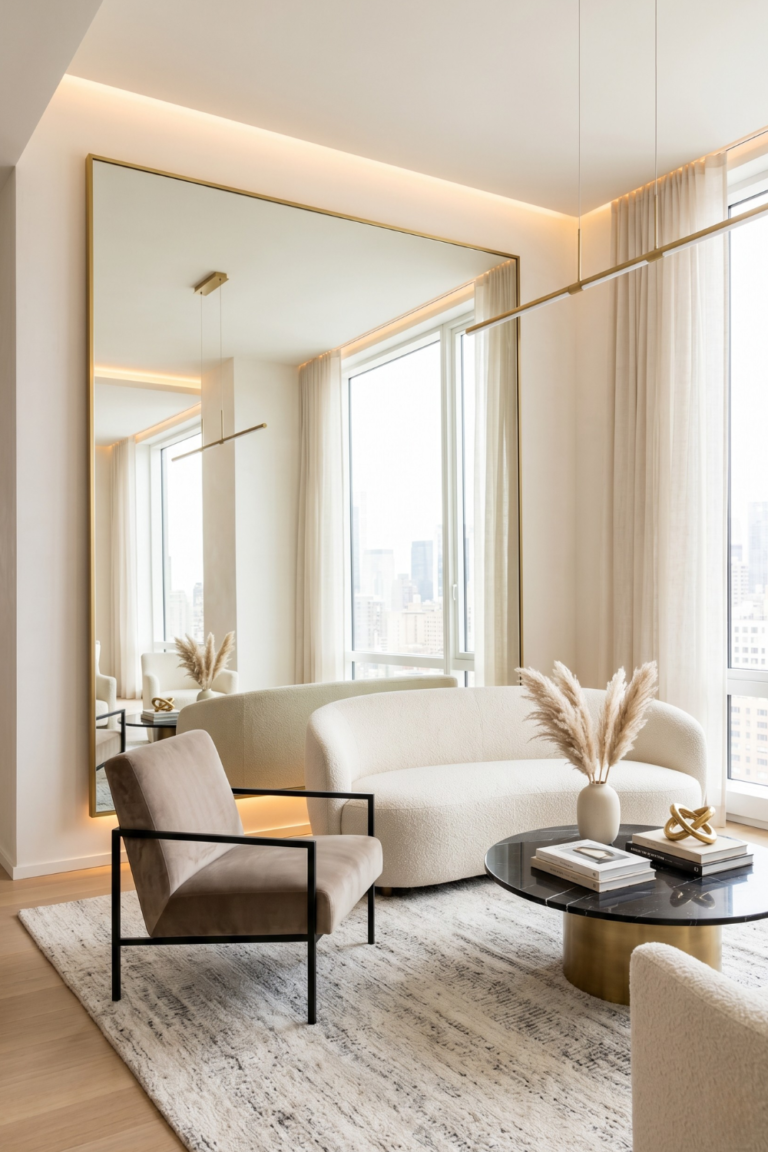
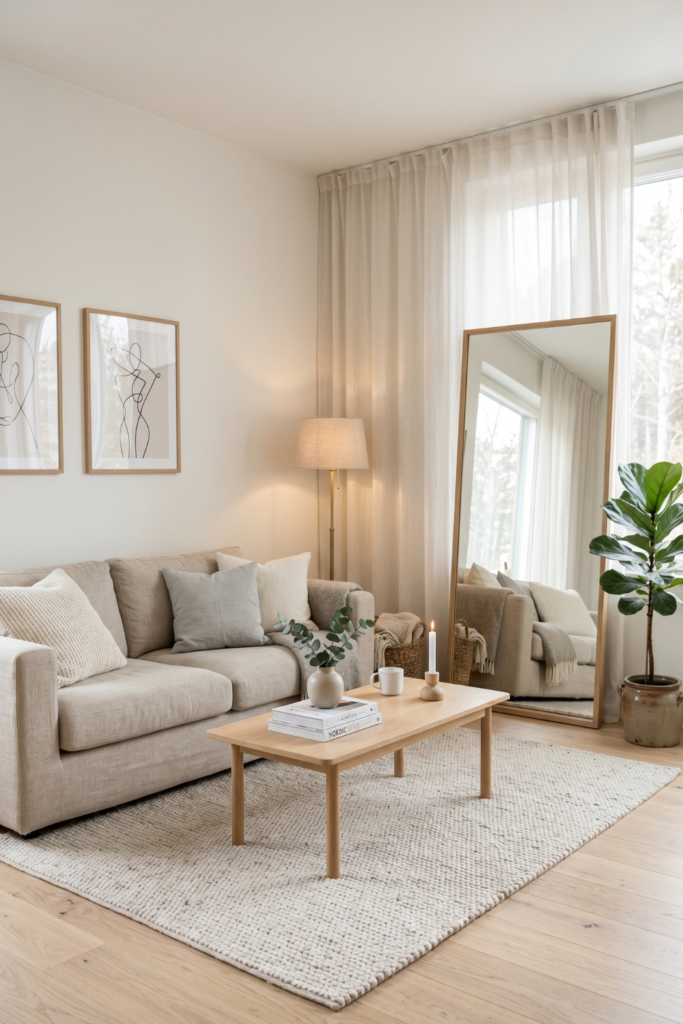
Mirrors are a classic design trick, but when used strategically, they can completely transform a small apartment living room. By reflecting both natural and artificial light, mirrors instantly make the room feel brighter and more open.
Placing a large mirror opposite a window amplifies sunlight and spreads it throughout the space. This creates a luminous effect that visually doubles the room’s depth. Even in dim apartments, mirrors can enhance brightness when positioned near light sources.
To elevate the aesthetic, choose statement mirrors with thin metal or wooden frames. Round mirrors soften the look, while rectangular ones emphasize structure and symmetry.
You can also layer smaller mirrors as part of a gallery wall to add dimension without overwhelming the space. This approach blends functionality with style, making your living room feel curated and spacious.
Mirrors fit seamlessly into modern, luxury, and industrial-inspired interiors, depending on the frame and placement.
Idea #4: Multi-Functional Furniture for Smart Space Use
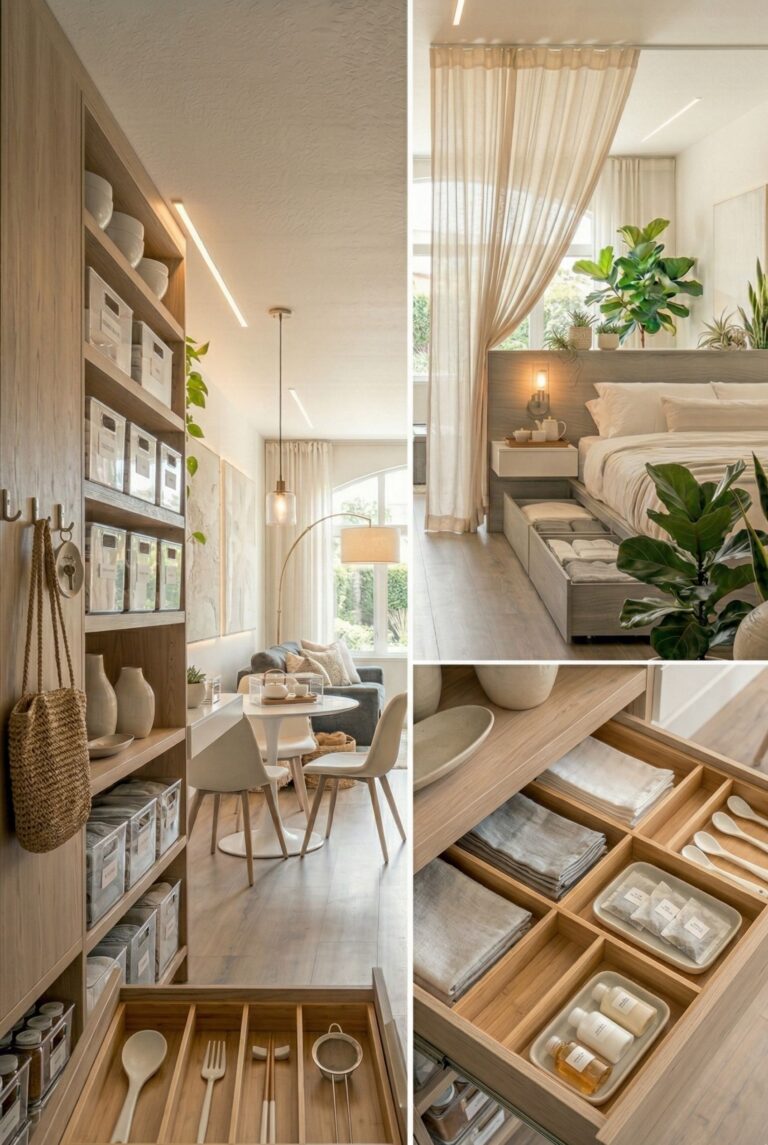
In apartment living, every piece of furniture should serve more than one purpose. Multi-functional furniture helps reduce clutter while maximizing usability, which is key to creating a spacious environment.
Think storage ottomans, sofa beds, or coffee tables with hidden compartments. These pieces allow you to keep essentials tucked away, maintaining a clean and open look throughout the room.
This approach works because clutter is one of the biggest factors that makes a space feel smaller. When everything has a designated place, the room instantly feels more organized and breathable.
Choose furniture with clean lines and minimal detailing to avoid visual heaviness. Light-colored finishes or transparent materials like glass can further enhance the illusion of space.
This idea is perfect for modern, minimalist, and small-space living designs where efficiency meets style.
Idea #5: Floating Shelves Instead of Bulky Storage
Bulky cabinets and heavy storage units can quickly overwhelm a small apartment living room. Replacing them with floating shelves creates a lighter, more open visual effect.
Floating shelves free up floor space, making the room feel less crowded. They also allow you to display decor in a curated way, adding personality without cluttering the area.
To keep the look cohesive, style shelves with a mix of books, small plants, and neutral decor objects. Avoid overcrowding, negative space is just as important as the items you display.
Opt for light wood or white shelves to maintain brightness. For a more modern or industrial look, you can incorporate slim metal brackets.
This idea works well in Scandinavian, modern, and bohemian interiors, where balance and simplicity are key.
Idea #6: Light Wood Elements for Warmth Without Heaviness
Light wood tones are perfect for adding warmth to your living room without making it feel heavy or dark. Materials like oak, ash, and birch bring a natural, organic feel that complements bright interiors.
Unlike darker woods, which can visually shrink a space, lighter finishes reflect more light and maintain an airy atmosphere. This makes them ideal for small apartments where openness is essential.
Incorporate light wood through coffee tables, TV units, shelving, or even accent chairs. Pairing these elements with neutral fabrics enhances the overall harmony of the room.
This style is especially popular in Scandinavian and Japandi designs, where natural materials and simplicity create a calm, balanced environment.
To complete the look, add soft textiles like wool throws or linen cushions to create a cozy yet spacious feel.

Idea #7: Glass and Acrylic Furniture for Visual Lightness
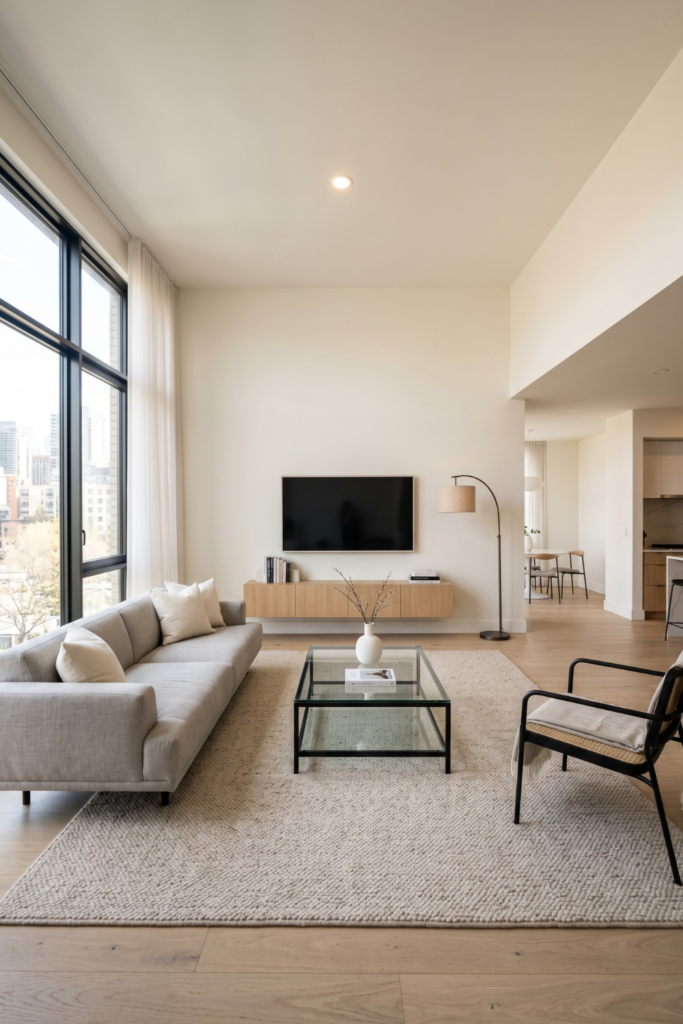
Transparent furniture pieces are a game-changer for small living rooms. Glass and acrylic tables create the illusion of more space because they don’t block visual flow.
A glass coffee table, for example, allows you to see the floor beneath it, making the room feel less crowded. This subtle trick can significantly enhance the perception of openness.
These materials also reflect light, contributing to a brighter overall look. When paired with soft textiles and neutral tones, they create a balanced and elegant aesthetic.
To avoid a cold or overly modern feel, combine transparent furniture with warm elements like rugs, cushions, or wooden accents.
This idea fits perfectly in contemporary, modern, and luxury-style living rooms where sleek design meets functionality.
Idea #8: Minimalist Layout with Intentional Spacing
Sometimes, the best way to make a space feel bigger is simply to use less. A minimalist layout focuses on keeping only essential furniture and allowing breathing room between pieces.
This approach works because overcrowding is one of the biggest mistakes in small apartments. By creating intentional spacing, you allow the room to feel open and uncluttered.
Start by choosing a few key pieces, a sofa, a coffee table, and perhaps a single accent chair. Arrange them in a way that promotes easy movement and flow.
Avoid pushing everything against the walls; instead, create a balanced layout that feels natural and functional. This subtle shift can make the room feel more thoughtfully designed.
Minimalism pairs beautifully with modern, Japandi, and Scandinavian styles, emphasizing simplicity and clarity.
Idea #9: Large Area Rug to Define and Expand the Space
It might seem counterintuitive, but using a larger area rug can actually make your living room feel bigger. Small rugs tend to break up the space, while larger ones unify it.
A well-sized rug anchors your furniture and creates a cohesive layout. This visual continuity makes the room appear more expansive and organized.
Choose rugs in light or neutral tones with subtle patterns to maintain brightness. Avoid overly busy designs that can make the space feel cluttered.
Ensure that at least the front legs of your furniture sit on the rug to create a connected look. This technique helps define the living area without closing it off.
This idea works across many styles, including modern, boho, and transitional interiors.
Idea #10: Layered Lighting for a Bright and Inviting Atmosphere
Lighting plays a crucial role in how spacious your living room feels. Relying on a single overhead light can create harsh shadows and make the room feel smaller.
Instead, use layered lighting, combine floor lamps, table lamps, and wall lights to create a soft, evenly lit environment. This eliminates dark corners and enhances the room’s openness.
Warm lighting adds coziness, while strategically placed fixtures highlight different areas of the room, making it feel more dynamic and expansive.
Choose sleek, minimal designs to avoid visual clutter. Light-colored or metallic finishes can further reflect light and enhance brightness.
Layered lighting works beautifully in modern, contemporary, and luxury interiors where ambiance is key.
Idea #11: Vertical Wall Decor to Draw the Eye Upward
Using vertical wall decor is an effective way to make your living room feel taller. Tall artwork, vertical panels, or stacked frames guide the eye upward, creating the illusion of height.
This technique works particularly well in apartments with lower ceilings, where horizontal layouts can make the space feel compressed.
Choose artwork with light backgrounds or subtle tones to maintain the airy feel. Slim frames and clean lines help keep the look modern and uncluttered.
You can also incorporate vertical shelving or wall-mounted decor elements to reinforce this effect.
This idea aligns well with modern, contemporary, and minimalist interiors.
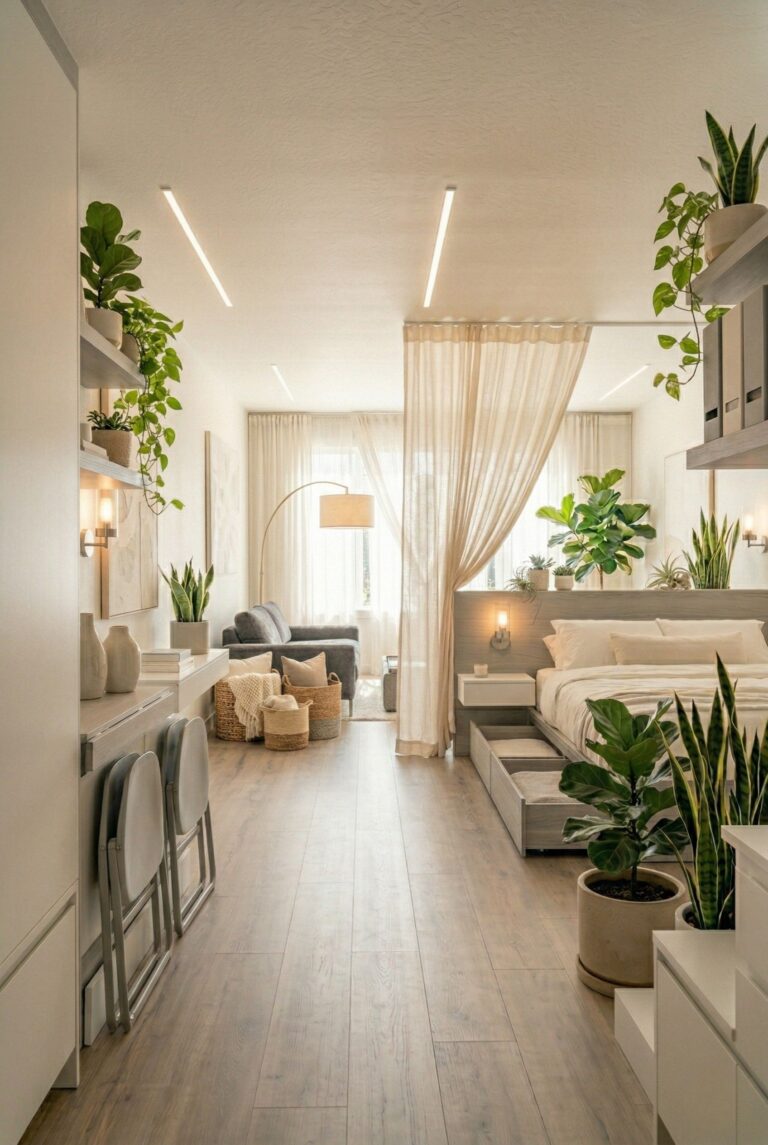
Idea #12: Indoor Plants to Add Life Without Clutter
Adding greenery can instantly brighten your living room and make it feel more vibrant and open. Plants bring a natural freshness that enhances both aesthetics and mood.
Opt for a few well-placed plants rather than overcrowding the space. A tall plant in a corner or a small one on a coffee table can add just the right amount of life.
Choose light-colored planters or natural materials like ceramic and terracotta to keep the look cohesive.
Plants pair beautifully with almost every design style, from bohemian to modern, adding texture without overwhelming the space.
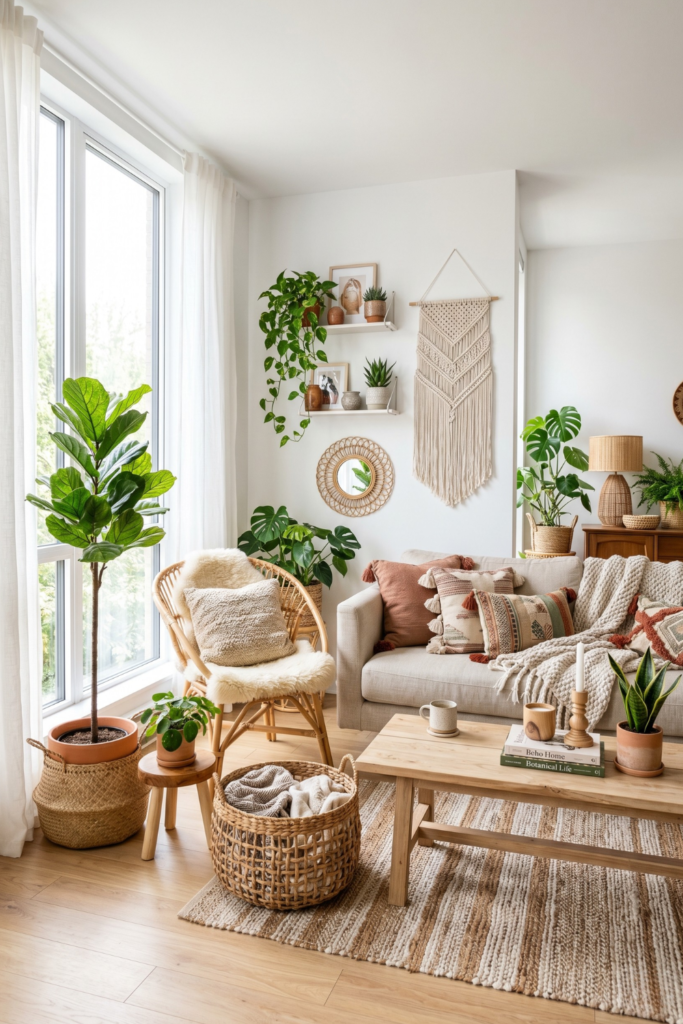
Idea #13: Low-Profile Furniture to Open Up Sightlines
Low-profile furniture is a subtle yet powerful way to make your apartment living room feel larger and more open. Sofas and tables that sit closer to the ground create more visible wall space above them, which enhances the perception of height.
This works because your eye naturally travels upward when there’s less visual obstruction. The result is a room that feels less crowded and more expansive without changing the actual square footage.
Choose sofas with slim arms and low backs, paired with simple coffee tables and minimal detailing. Avoid bulky, overstuffed furniture that visually dominates the room.
This style fits perfectly with modern, mid-century modern, and Japandi interiors, where clean lines and functional design are prioritized.
Idea #14: Monochromatic Color Scheme for Visual Continuity
A monochromatic color scheme uses varying shades of a single color to create a seamless and cohesive look. This approach eliminates harsh contrasts, allowing the room to feel more unified and spacious.
For example, layering soft whites, creams, and warm beiges creates depth without breaking visual flow. The absence of strong color interruptions helps the space feel calm and expansive.
To keep the design interesting, incorporate different textures, such as linen, wool, and wood, within the same color family. This adds richness without compromising simplicity.
Monochromatic designs are especially effective in minimalist, Scandinavian, and luxury interiors where elegance comes from subtle detail rather than bold contrast.
Idea #15: Wall-Mounted TV Units for a Clean Look
Traditional TV stands can take up valuable floor space and make your living room feel crowded. Switching to a wall-mounted TV unit instantly frees up space and creates a sleek, modern aesthetic.
By lifting the unit off the ground, you allow more visible floor area, which contributes to a more open feel. It also helps reduce visual clutter by keeping cables and accessories neatly organized.
Choose floating consoles in light wood or neutral finishes to maintain brightness. Keep styling minimal,just a few decor pieces are enough to enhance the look without overwhelming it.
This idea works particularly well in modern, contemporary, and small apartment designs focused on functionality and clean lines.
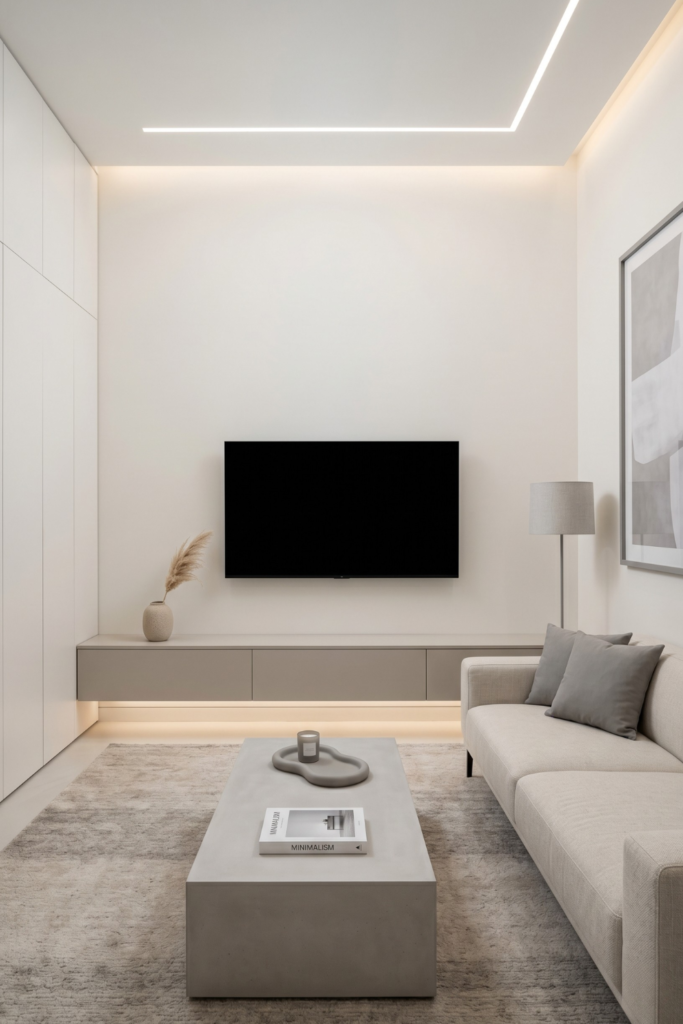
Idea #16: Strategic Use of Reflective Surfaces
Incorporating reflective surfaces beyond mirrors, such as glossy finishes, metallic accents, and glass decor, can significantly enhance brightness in your living room.
These materials bounce light around the space, reducing shadows and creating a luminous, open atmosphere. Even small additions like metallic lamps or glossy coffee tables can make a noticeable difference.
The key is balance. Too many reflective elements can feel overwhelming, so pair them with soft textures like rugs and cushions to maintain warmth.
This idea is especially effective in contemporary and luxury interiors, where light and texture work together to create a sophisticated, spacious feel.
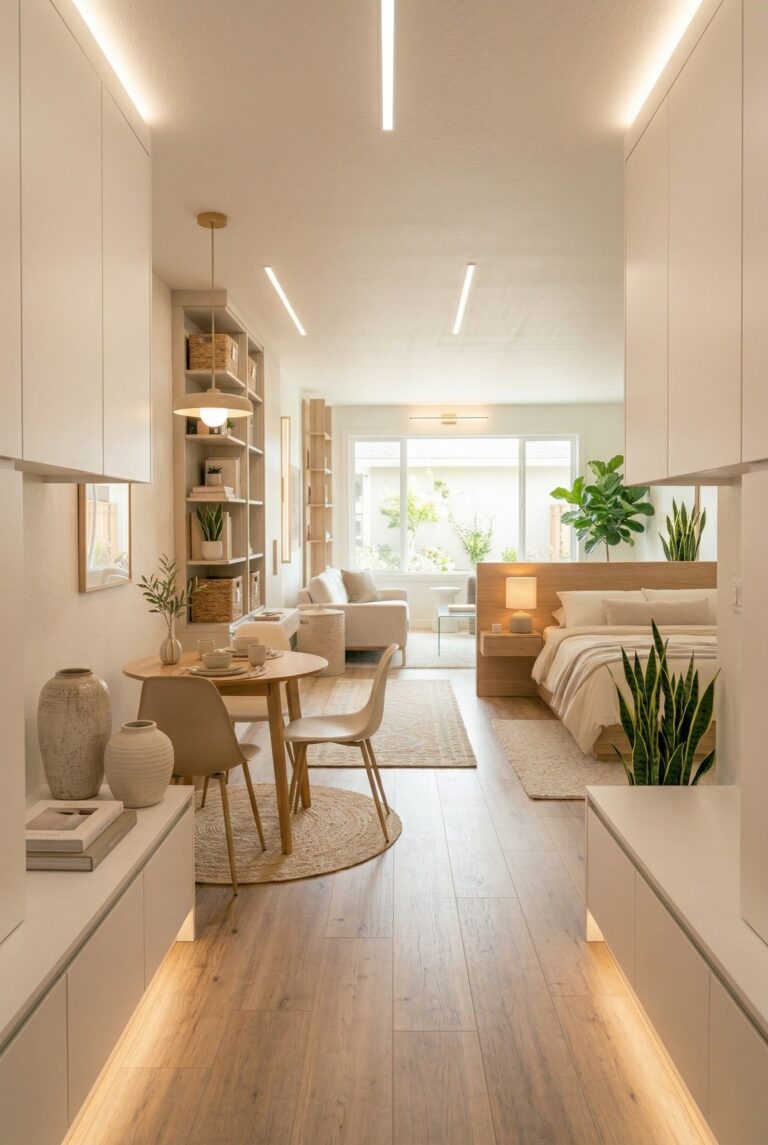
Idea #17: Open-Concept Flow with Minimal Barriers
If your apartment layout allows it, maintaining an open flow between your living room and adjacent spaces can make a huge difference. Avoid using bulky dividers or heavy furniture that interrupts visual continuity.
Instead, use subtle zoning techniques like rugs, lighting, or furniture placement to define areas without closing them off. This keeps the space feeling connected and expansive.
Open layouts work because they allow light and movement to flow freely, making the entire area feel larger than individual sections.
This approach is ideal for modern, contemporary, and transitional homes where fluidity and openness are key design principles.
Idea #18: Light-Colored Flooring to Enhance Brightness
Flooring plays a major role in how light interacts with your living room. Light-colored floors—such as pale wood, whitewashed finishes, or light tiles, reflect more light and make the space feel bigger.
Dark flooring, on the other hand, can absorb light and visually shrink the room. If replacing flooring isn’t an option, you can achieve a similar effect with large, light-colored rugs.
Pair light floors with neutral furniture and soft textures to create a cohesive, airy look. This combination enhances both brightness and comfort.
This idea works across many styles, including Scandinavian, coastal, and modern interiors.
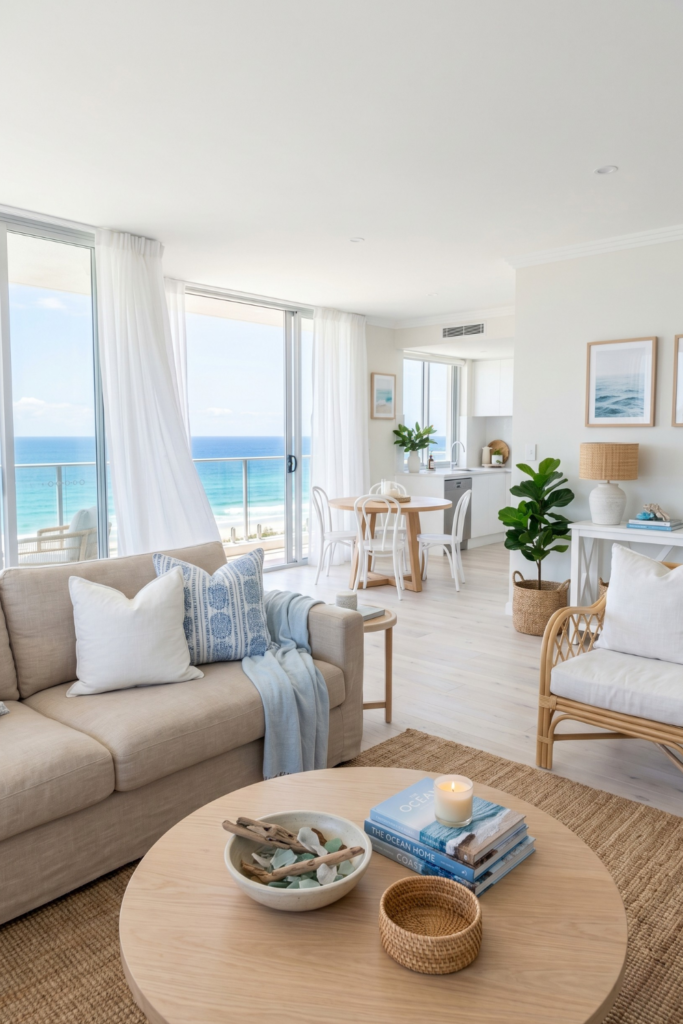
Idea #19: Statement Light Fixture to Elevate the Room
A well-chosen light fixture can act as a focal point while enhancing the overall brightness of your living room. Instead of bulky chandeliers, opt for sleek, modern designs that add elegance without overwhelming the space.
Pendant lights, sculptural fixtures, or minimalist chandeliers can draw the eye upward, making the room feel taller and more refined.
Choose finishes like brushed gold, matte black, or soft metallics to complement your decor style. Ensure the scale of the fixture matches your room size to maintain balance.
This idea works beautifully in modern, luxury, and transitional interiors where lighting doubles as both function and design statement.
Idea #20: Sheer Layers for Soft, Diffused Light
Layering sheer curtains with blinds or heavier drapes allows you to control light while maintaining an airy feel. Sheer fabrics soften incoming light, creating a warm and inviting atmosphere.
This approach prevents harsh lighting while still keeping the room bright. It also adds a subtle layer of texture that enhances the overall design.
Choose light, neutral shades to maintain consistency with the rest of your decor. Avoid heavy patterns that can disrupt the clean aesthetic.
This idea pairs well with coastal, Scandinavian, and modern interiors that prioritize light and softness.
Idea #21: Curved Furniture for a Softer, Spacious Feel
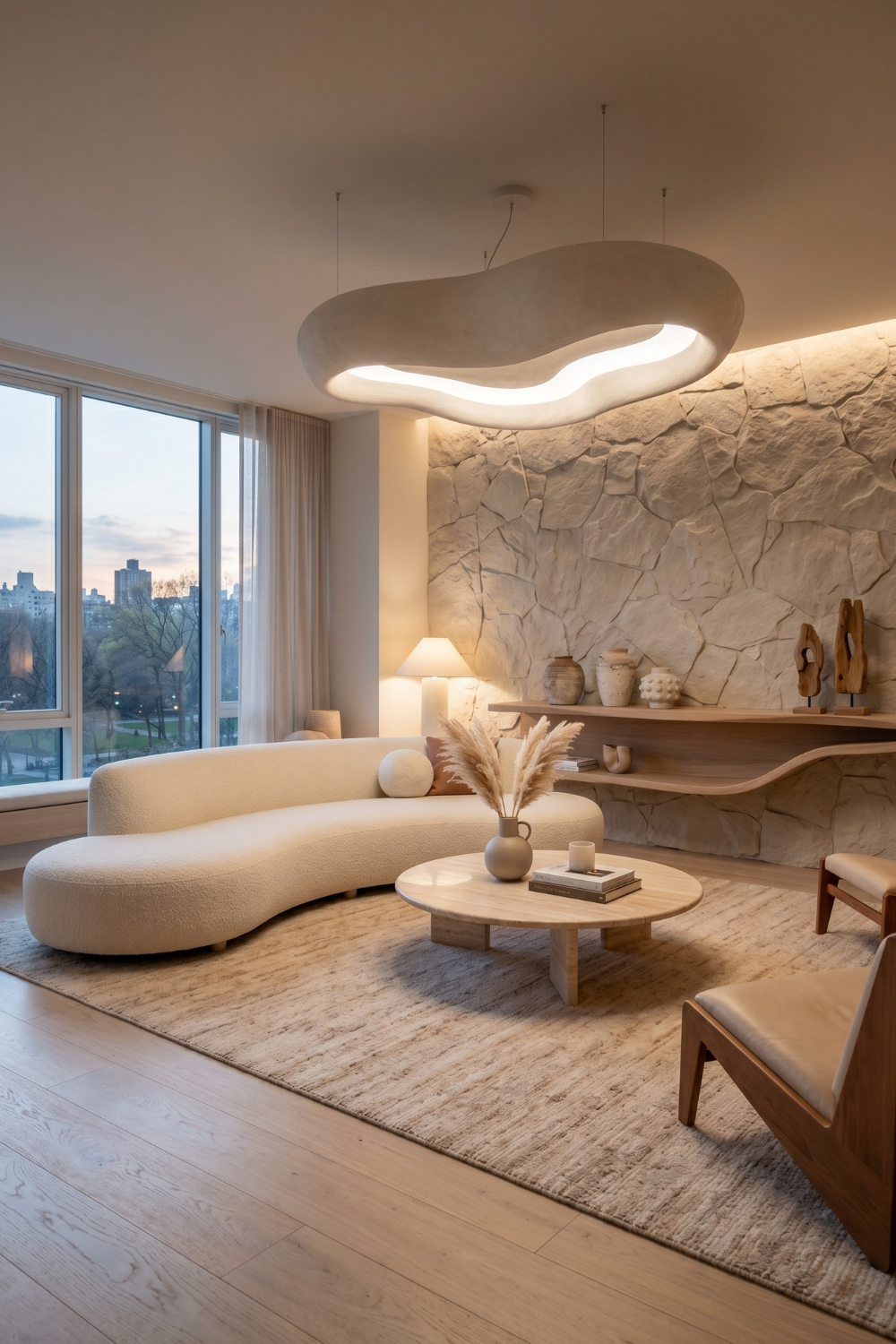
Curved furniture introduces a sense of flow and softness that can make your living room feel more open. Unlike sharp edges, curved lines guide the eye smoothly around the space.
This creates a more relaxed and natural layout, reducing the rigid feel that can make small rooms appear cramped.
Incorporate elements like round coffee tables, curved sofas, or arched decor pieces. These shapes add visual interest while enhancing the perception of space.
Curved designs work particularly well in modern, contemporary, and organic modern interiors.
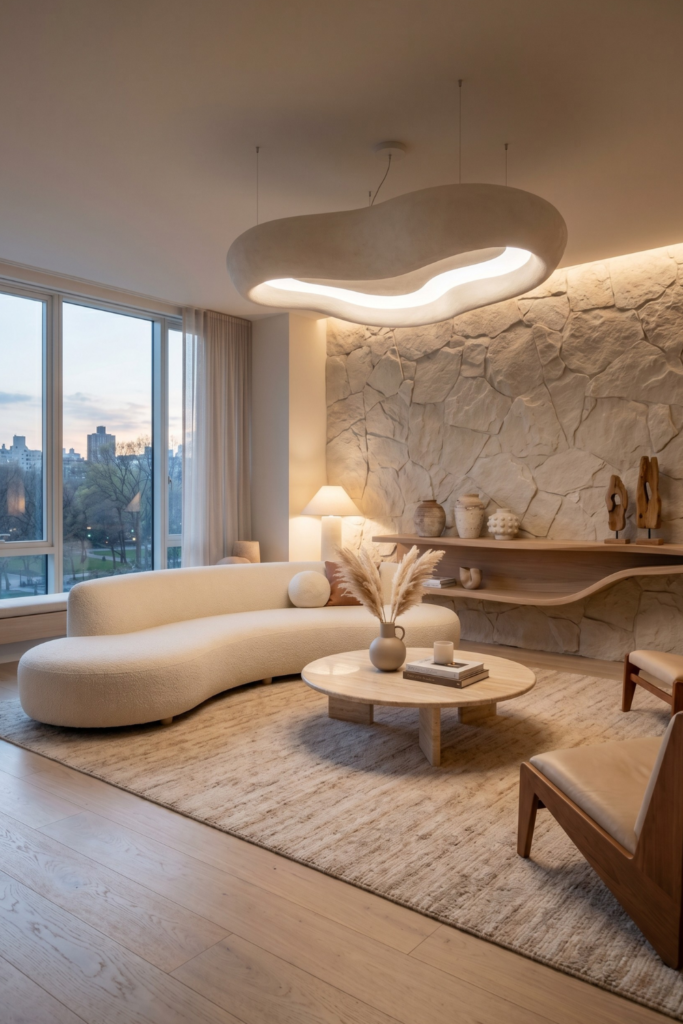
Idea #22: Hidden Storage to Maintain a Clean Look
Clutter is one of the biggest obstacles to making a space feel large and bright. Hidden storage solutions help keep your living room organized while maintaining a clean aesthetic.
Use furniture with built-in storage, such as benches, ottomans, or modular sofas. This allows you to store items out of sight, reducing visual noise.
A tidy space automatically feels more spacious because there are fewer distractions. This simplicity enhances both functionality and style.
This idea is essential for small apartments and works across all design styles, especially minimalist and modern interiors.
Idea #23: Accent Wall in a Soft Tone for Depth
While light colors dominate small spaces, a subtle accent wall can add depth without making the room feel smaller. The key is choosing soft, muted tones rather than bold, dark shades.
A pale sage green, soft blue, or warm greige can create visual interest while maintaining brightness. This adds dimension without disrupting the airy feel.
Keep the rest of the room neutral to allow the accent wall to stand out gently. Pair it with light furniture and minimal decor for balance.
This idea works well in modern, transitional, and organic interiors.
Idea #24: Minimal Decor with High Impact Pieces
Instead of filling your living room with multiple small items, focus on a few statement pieces that make an impact. This approach reduces clutter while enhancing style.
A large piece of artwork, a sculptural lamp, or a unique coffee table can define the room without overwhelming it. This creates a more curated and intentional look.
The key is quality over quantity. Fewer, well-chosen items allow the space to breathe and feel more open.
This idea aligns perfectly with minimalist, luxury, and contemporary interiors.
Conclusion
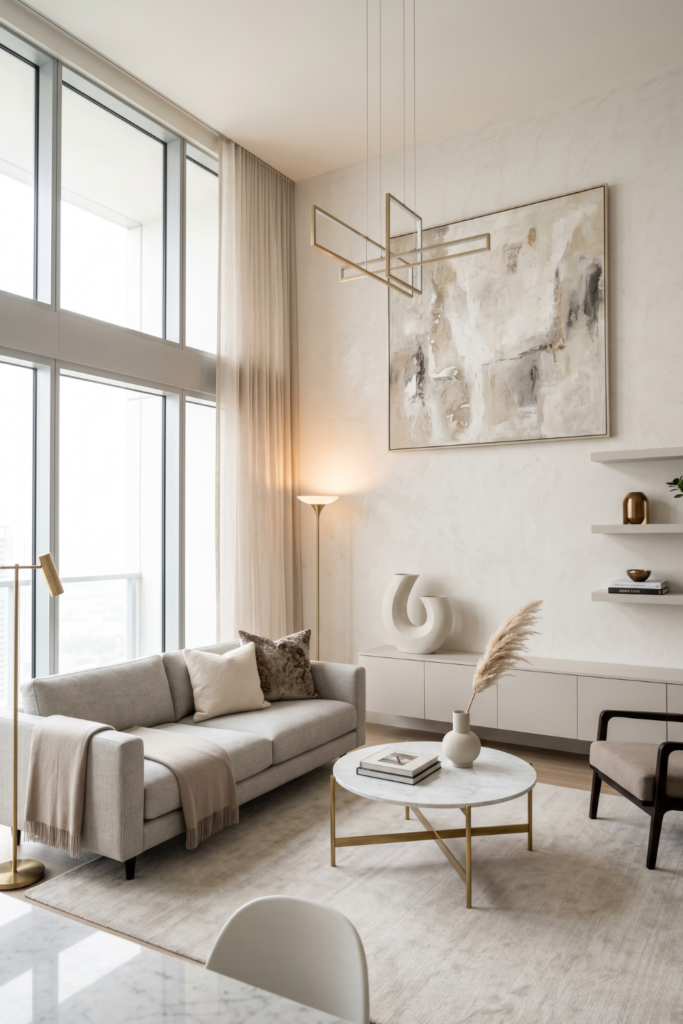
Designing an apartment living room that feels bigger and brighter doesn’t require more space, it simply requires smarter choices. From light color palettes and reflective surfaces to intentional layouts and multi-functional furniture, each idea works together to create a space that feels open, airy, and beautifully styled.
The key is balance: keeping things light, uncluttered, and thoughtfully arranged. By combining these strategies, you can transform even the smallest living room into a space that feels inviting, spacious, and effortlessly elegant.
Start with a few ideas that resonate with your style, and gradually build a living room that not only looks bigger but truly feels better to live in.