24 Small Living Room Layout Ideas That Maximize Every Inch
Struggling to make your small living room feel functional without sacrificing style? You’re not alone. Many homes especially apartments, face the challenge of limited space, awkward layouts, and clutter buildup that makes everything feel cramped.
The good news? A well-thought-out layout can completely transform how your living room looks and feels. With the right arrangement, even the smallest space can feel open, intentional, and beautifully styled.
In this guide, you’ll discover small living room layout ideas that maximize every inch, helping you improve flow, enhance comfort, and create a space that feels far bigger than it actually is.
Idea #1: Float the Sofa Away From the Wall
One of the biggest layout mistakes in small living rooms is pushing all furniture against the walls. While it may seem like it creates more space, it often results in a disconnected and unbalanced look.
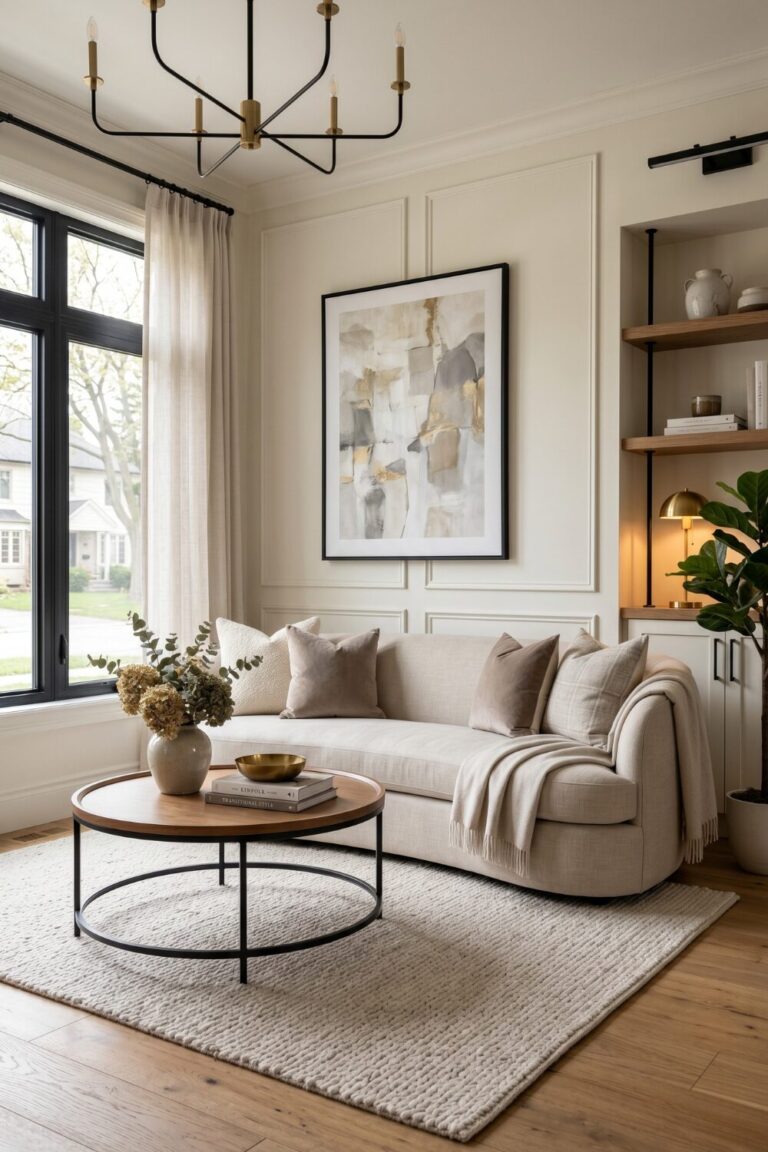
Floating your sofa slightly away from the wall, especially in a central position, helps define a clear seating zone. This creates a more intentional layout and improves traffic flow around the room. It also gives your space a more designer, high-end feel rather than a cramped one.
This layout works beautifully in modern, Scandinavian, and transitional interiors where balance and openness are key. Pair the sofa with a slim console table behind it or a floor lamp to anchor the space.
The best part? Even shifting your sofa just a few inches forward can completely change how spacious your room feels. It creates visual breathing room and allows your layout to feel more curated rather than crowded.
Idea #2: Use a Corner Sectional to Maximize Seating
If you think sectionals are only for large spaces, think again. A compact corner sectional can actually be one of the smartest layout choices for a small living room.
By utilizing corner space, you maximize seating without overcrowding the room with multiple chairs. This layout eliminates the need for extra furniture pieces, keeping the design clean and efficient.
This works particularly well in contemporary and modern interiors where simplicity and functionality are prioritized. Choose a low-profile sectional in neutral tones to keep the space feeling open and light.
To enhance this layout, pair the sectional with a round coffee table. This softens the angles and improves movement around the room, making it easier to navigate.
A corner sectional creates a cozy, defined seating area while ensuring no square footage goes to waste, making it perfect for small apartments or compact homes.
Idea #3: Create Zones With a Rug-Based Layout
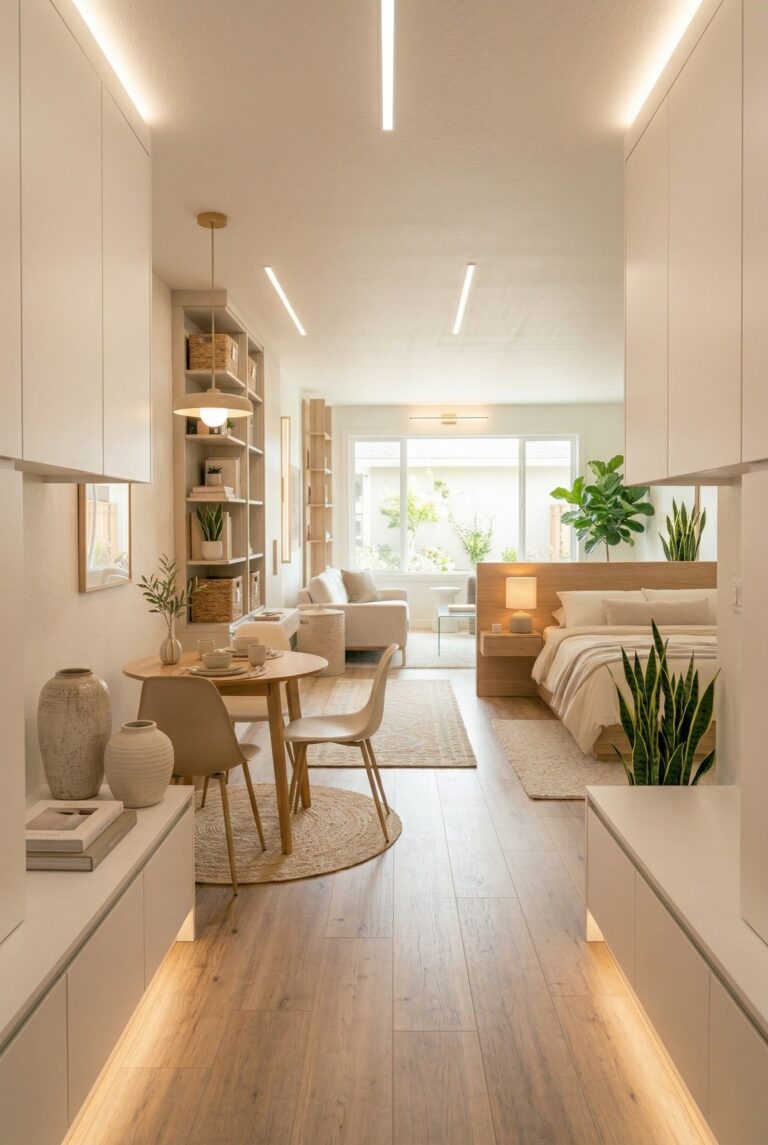
In small living rooms, defining zones is essential,even if the space is limited. A rug can act as an anchor that visually organizes your layout and makes the room feel structured.
Place all your main furniture pieces, sofa, coffee table, and chairs, either fully or partially on the rug. This creates a cohesive seating area and prevents the room from feeling scattered.
This layout technique is widely used in boho, organic modern, and minimalist interiors because it adds both visual warmth and structure. A textured rug can also introduce depth without adding clutter.
The key is choosing the right size. A rug that’s too small will break the layout, while a properly sized rug will unify the space and make it feel larger.
By grounding your layout with a rug, you create a clear focal point that enhances both aesthetics and functionality.

Idea #4: Align Furniture With Natural Traffic Flow
One of the most overlooked aspects of small living room layouts is how people move through the space. Ignoring traffic flow can make even a beautifully styled room feel awkward and cramped.
Instead, arrange furniture in a way that allows easy movement from one side of the room to the other. Avoid blocking pathways with bulky furniture or sharp corners.
This layout approach works especially well in minimalist and contemporary interiors where clean lines and openness are essential. Keep pathways clear and ensure there’s enough space to walk comfortably around furniture.
For example, position your coffee table slightly off-center or opt for a narrower design to improve circulation.
When your layout respects natural movement, your living room instantly feels more spacious, functional, and comfortable to use every day.
Idea #5: Use a TV Wall as the Main Anchor Point
In many small living rooms, the TV naturally becomes the focal point. Instead of fighting it, design your layout around it intentionally.
Position your sofa directly facing the TV wall and build your layout outward from that anchor. This creates a clear structure and eliminates confusion about furniture placement.
This works well in modern, industrial, and transitional styles where functionality meets aesthetics. Consider a sleek wall-mounted TV unit to save floor space and reduce visual clutter.
To elevate the design, incorporate floating shelves or built-in storage around the TV. This maximizes vertical space while keeping everything organized.
By using the TV wall as a focal anchor, your layout becomes more cohesive and purposeful—perfect for both relaxation and entertaining.
Idea #6: Choose Multi-Functional Furniture Pieces
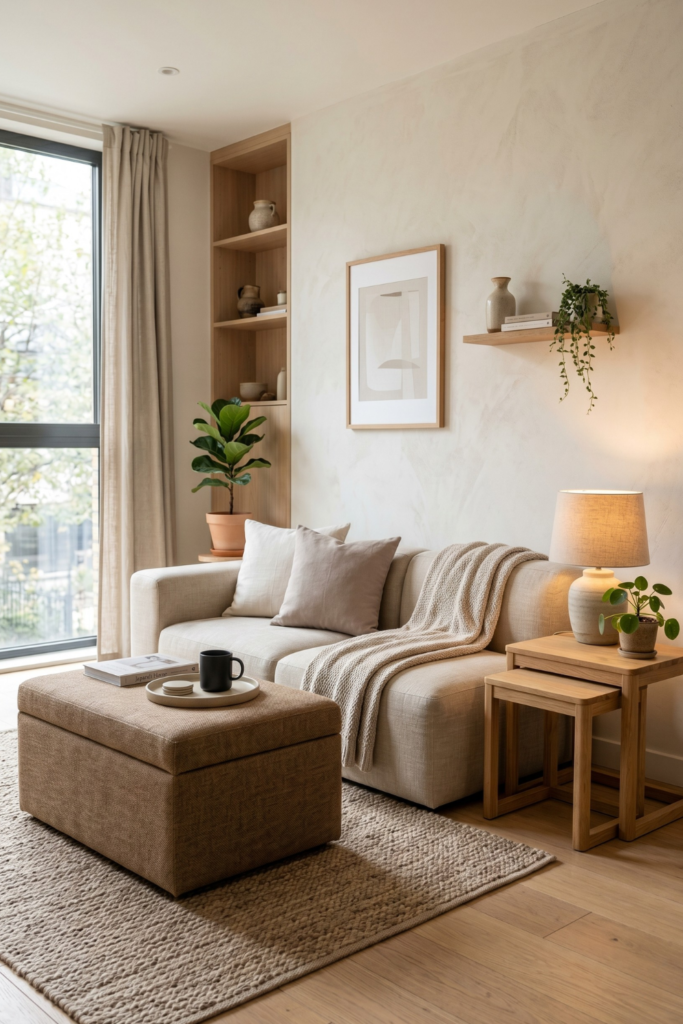
When space is limited, every piece of furniture should work harder. Multi-functional furniture is essential for maximizing both layout efficiency and usability.
Think ottomans with hidden storage, nesting tables, or sofas that double as beds. These pieces allow you to maintain a clean layout while adding versatility to your space.
This approach is especially popular in small-space living, modern, and Japandi interiors where simplicity and function go hand in hand.
For example, a storage ottoman can replace a bulky coffee table while providing extra seating and hidden storage.
By incorporating multi-functional pieces, you reduce clutter, improve layout flexibility, and make your living room more adaptable to different needs.
Idea #7: Keep Furniture Low-Profile for an Open Feel
Bulky furniture can overwhelm a small living room, making it feel tighter than it actually is. A better layout strategy is to choose low-profile furniture that visually opens up the space.
Low sofas, slim chairs, and minimal coffee tables help create a sense of height and airiness. This makes the room feel less crowded and more balanced.
This layout works beautifully in Japandi, minimalist, and modern interiors where clean lines and simplicity are key.
To enhance the effect, keep sightlines clear by avoiding tall or heavy pieces in the center of the room.
The result is a layout that feels light, breathable, and visually expansive, even in a compact space.
Idea #8: Use Symmetry for a Balanced Layout
Symmetry can bring a sense of order and calm to small living rooms, making them feel more polished and intentional.
Arrange furniture in a mirrored layout, such as two chairs facing a sofa or matching side tables on each side. This creates a balanced visual structure that’s easy on the eyes.
This works particularly well in transitional and luxury-inspired interiors where harmony and elegance are important.
Symmetry also helps simplify decision-making when arranging furniture, making it easier to create a cohesive look.
Even in a small space, a symmetrical layout can make your living room feel more refined, organized, and thoughtfully designed.
Idea #9: Utilize Vertical Space for Storage and Decor
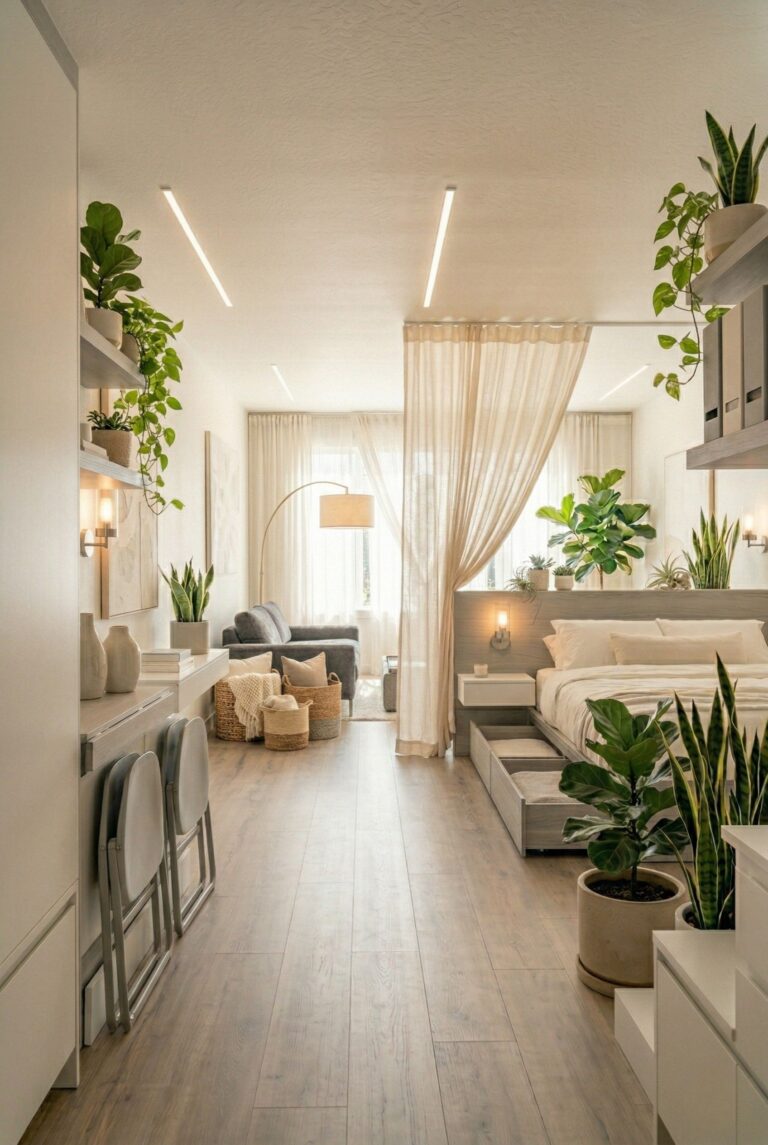
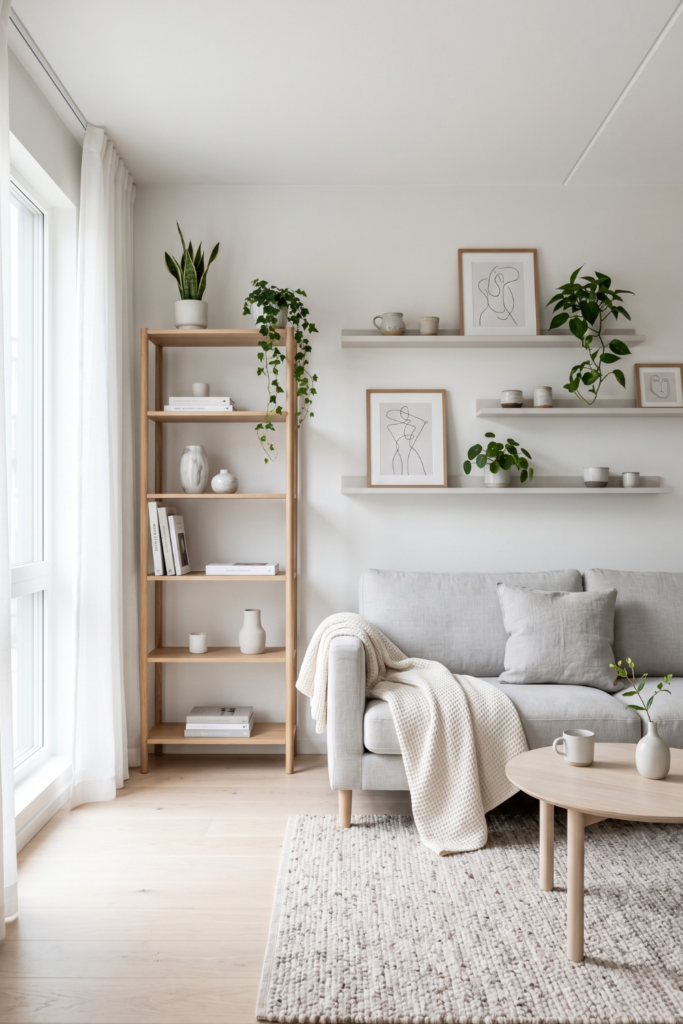
When floor space is limited, look up. Vertical space is often underutilized but can significantly enhance your living room layout.
Install floating shelves, tall bookcases, or wall-mounted storage units to free up valuable floor space. This keeps your layout clean and uncluttered.
This approach works well in modern, industrial, and Scandinavian interiors where functionality meets style.
Use vertical elements to display decor, books, or plants without overcrowding the room.
By shifting storage upward, you create more room to move and maintain a layout that feels open and efficient.
Idea #10: Angle Furniture for Better Flow
Not every layout needs to follow straight lines. Angling furniture, like placing a chair diagonally can create a more dynamic and spacious feel.
This technique helps soften rigid layouts and improves movement around the room. It’s especially useful in awkwardly shaped spaces.
Angled layouts are often seen in eclectic, boho, and contemporary interiors where creativity plays a big role.
For example, a diagonally placed accent chair can open up pathways while adding visual interest.
By breaking away from strict alignment, you create a layout that feels more natural, inviting, and visually engaging.
Idea #11: Define the Space With Lighting Placement
Lighting isn’t just decorative, it plays a key role in shaping your layout. Strategic placement of floor lamps and table lamps can help define zones and enhance functionality.
Instead of relying solely on overhead lighting, use layered lighting to create depth and warmth.
This layout strategy works beautifully in modern, cozy, and organic interiors.
Place a floor lamp next to your sofa or a table lamp on a side table to highlight seating areas.
Lighting helps guide the eye, making your layout feel more structured and visually appealing without adding clutter.
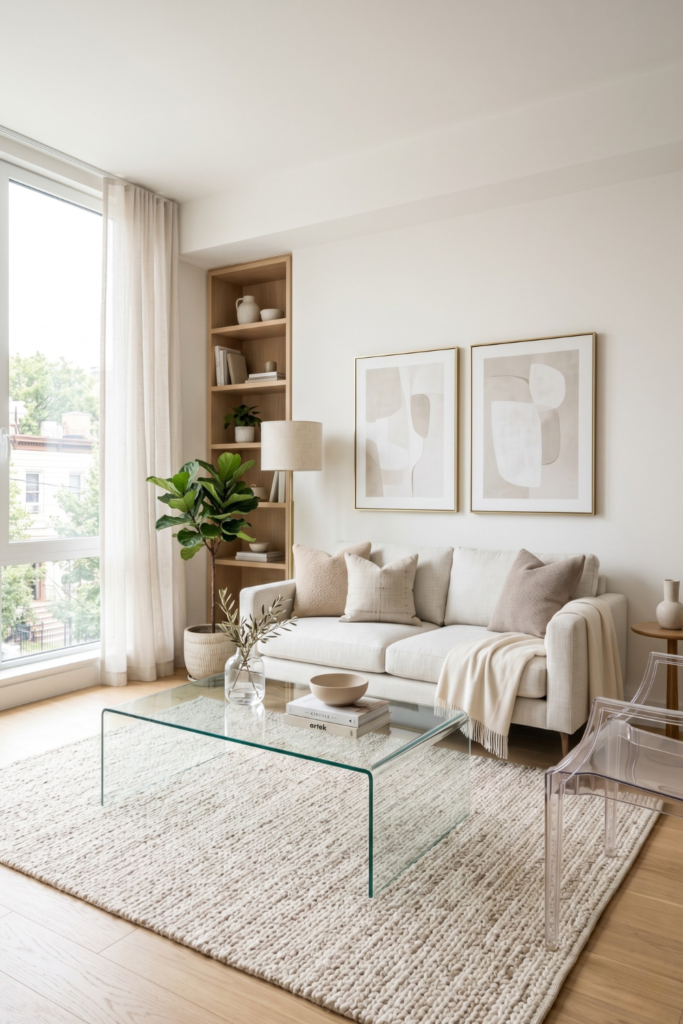
Idea #12: Use Transparent or Light Furniture
Glass or acrylic furniture can visually “disappear,” making your living room feel less crowded.
A glass coffee table or lucite chair allows light to pass through, creating an airy and open effect.
This layout trick is perfect for contemporary and minimalist interiors where visual lightness is key.
Pair transparent pieces with soft textures to maintain warmth while keeping the layout visually clean.
It’s a simple yet powerful way to maximize space without sacrificing style.
Idea #13: Create a Window-Focused Layout for Natural Light
Natural light is one of the most powerful tools for making a small living room feel bigger. Instead of blocking windows with bulky furniture, design your layout to highlight and maximize light flow.
Position your main seating, like your sofa or chairs facing or adjacent to the window. This creates a bright, inviting focal point that naturally draws the eye outward, making the room feel more expansive.
This layout works beautifully in Scandinavian, coastal, and organic modern interiors where light and openness are essential. Keep window treatments minimal, like sheer curtains or light linen drapes to allow maximum daylight in.
The result is a space that feels fresh, airy, and visually larger without changing the room’s actual size.
Idea #14: Use a Narrow Console Behind the Sofa
If your sofa is floating in the room, a slim console table behind it can add both function and structure without taking up too much space.
This layout trick creates a subtle boundary for your seating area while adding extra surface space for decor, lighting, or storage. It also makes the layout feel more complete and intentional.
This works especially well in transitional, modern, and farmhouse interiors where layered styling is key.
Choose a narrow design to keep the walkway open, and style it with minimal decor—like a small lamp or a few curated accessories.
It’s a smart way to add depth and usability without overcrowding your layout.
Idea #15: Opt for Armless Chairs to Save Space
Traditional armchairs can take up more visual and physical space than necessary. Armless chairs, on the other hand, provide seating while keeping the layout light and flexible.
They’re easier to move around, making your layout adaptable for different needs, whether you’re entertaining guests or relaxing alone.
This layout choice works well in modern, minimalist, and mid-century interiors where sleek silhouettes are preferred.
Pair armless chairs with a compact side table or tuck them slightly under a console when not in use.
By reducing visual bulk, you create a more open and breathable layout.
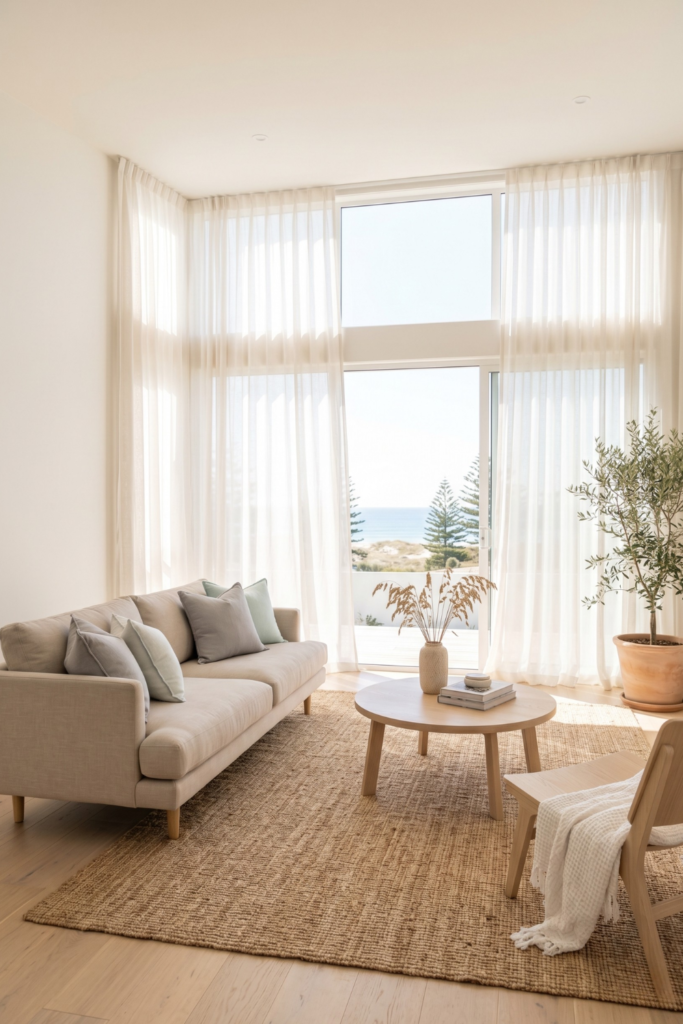
Idea #16: Use Built-In Storage to Eliminate Clutter
Clutter is one of the biggest enemies of a small living room. Built-in storage solutions can help you maintain a clean and organized layout.
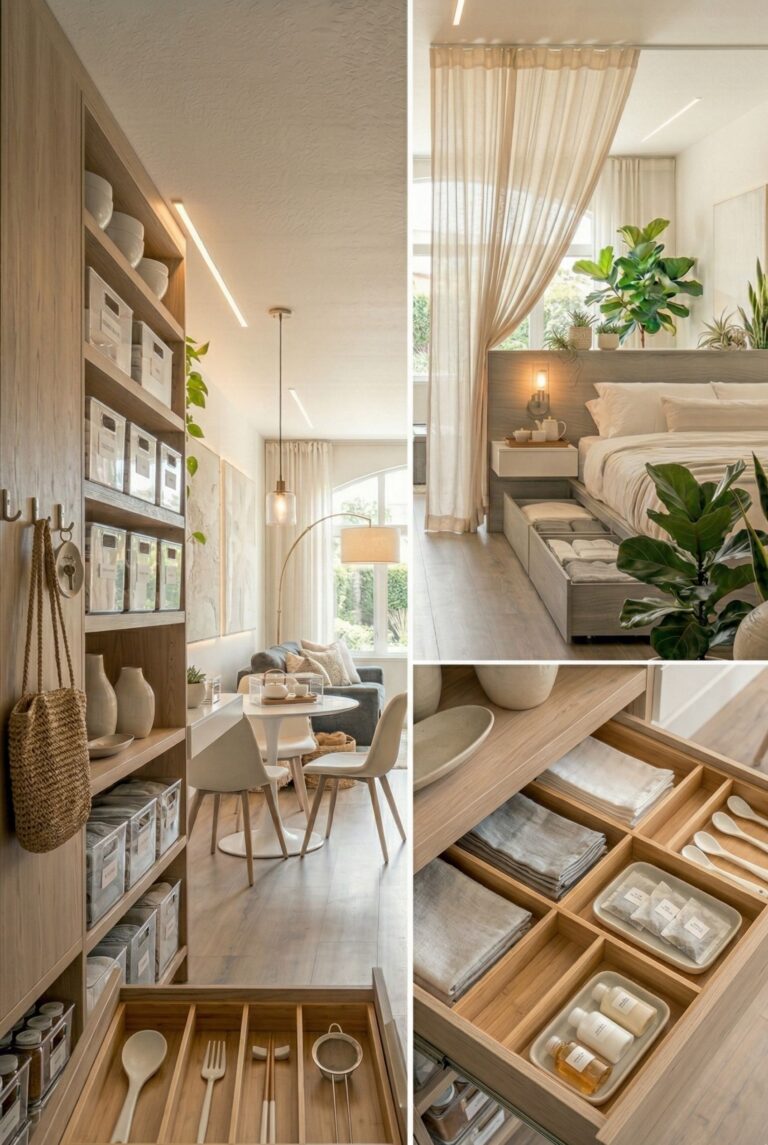
Consider built-in shelves, cabinets, or bench seating with hidden storage. These elements blend seamlessly into the room while maximizing every inch of available space.
This approach is popular in modern, minimalist, and luxury interiors where clean lines and functionality are prioritized.
Built-ins reduce the need for extra furniture, allowing your layout to feel more open and less crowded.
The result is a streamlined, efficient space that feels calm and intentional.
Idea #17: Keep a Central Focal Point to Guide Layout
Every well-designed living room needs a focal point. In small spaces, having a clear focal point helps guide furniture placement and prevents the layout from feeling chaotic.
This could be a TV, a statement wall, a fireplace, or even a large piece of artwork.
Once you establish your focal point, arrange all furniture around it. This creates a cohesive and structured layout that feels easy to navigate.
This strategy works across all styles—from modern to rustic—because it brings clarity and purpose to the design.
A strong focal point makes your layout feel organized and visually appealing.
Idea #18: Use Nesting Tables Instead of a Bulky Coffee Table
Large coffee tables can dominate a small living room and restrict movement. Nesting tables offer a flexible alternative that adapts to your needs.
You can expand them when needed or tuck them away to create more space.
This layout solution works beautifully in contemporary, minimalist, and small-space interiors.
Choose lightweight designs with slim frames to maintain an airy look.
Nesting tables provide functionality without compromising your layout, making them ideal for compact living rooms.
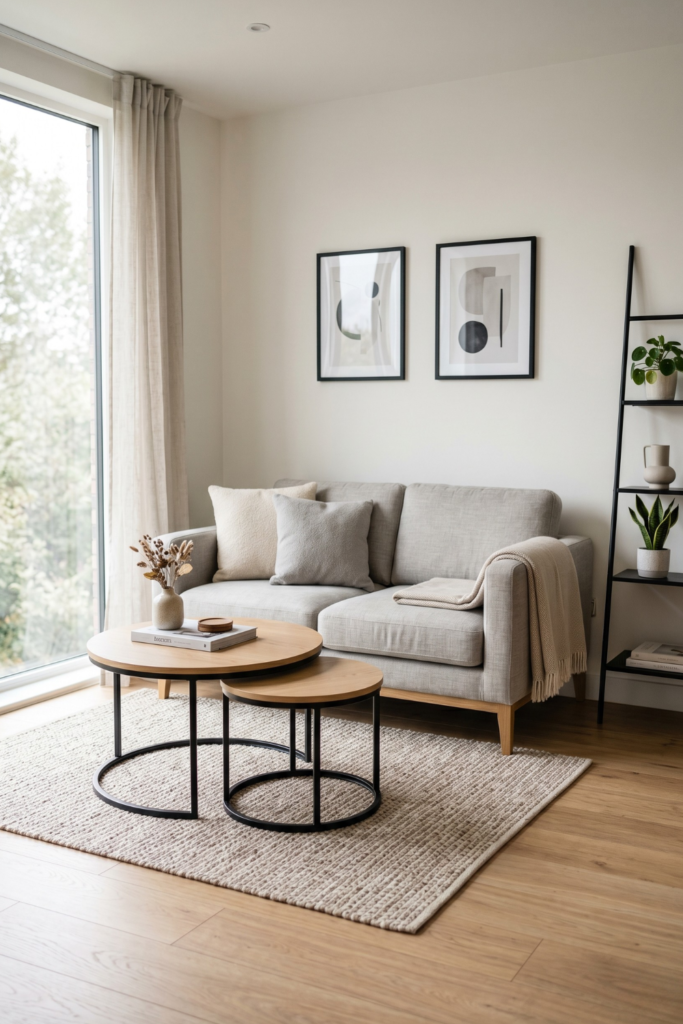
Idea #19: Float Furniture Around a Central Rug
Instead of placing furniture only along walls, arrange your seating around a central rug to create a defined conversation area.
This layout creates a cozy and intentional zone while improving the overall flow of the room.
It’s especially effective in boho, organic modern, and transitional interiors where layering and warmth are important.
Use a medium-sized rug that comfortably fits your main furniture pieces.
This arrangement helps your space feel structured and inviting, even in a small footprint.
Idea #20: Incorporate a Slim Media Unit for Efficiency
Bulky TV stands can eat up valuable floor space. A slim media unit or wall-mounted console keeps your layout clean and efficient.
This allows more room for movement while maintaining functionality.
This layout approach works well in modern, industrial, and minimalist interiors where simplicity is key.
Choose designs with hidden storage to reduce clutter and maintain a sleek appearance.
A streamlined media unit keeps your layout balanced and visually light.
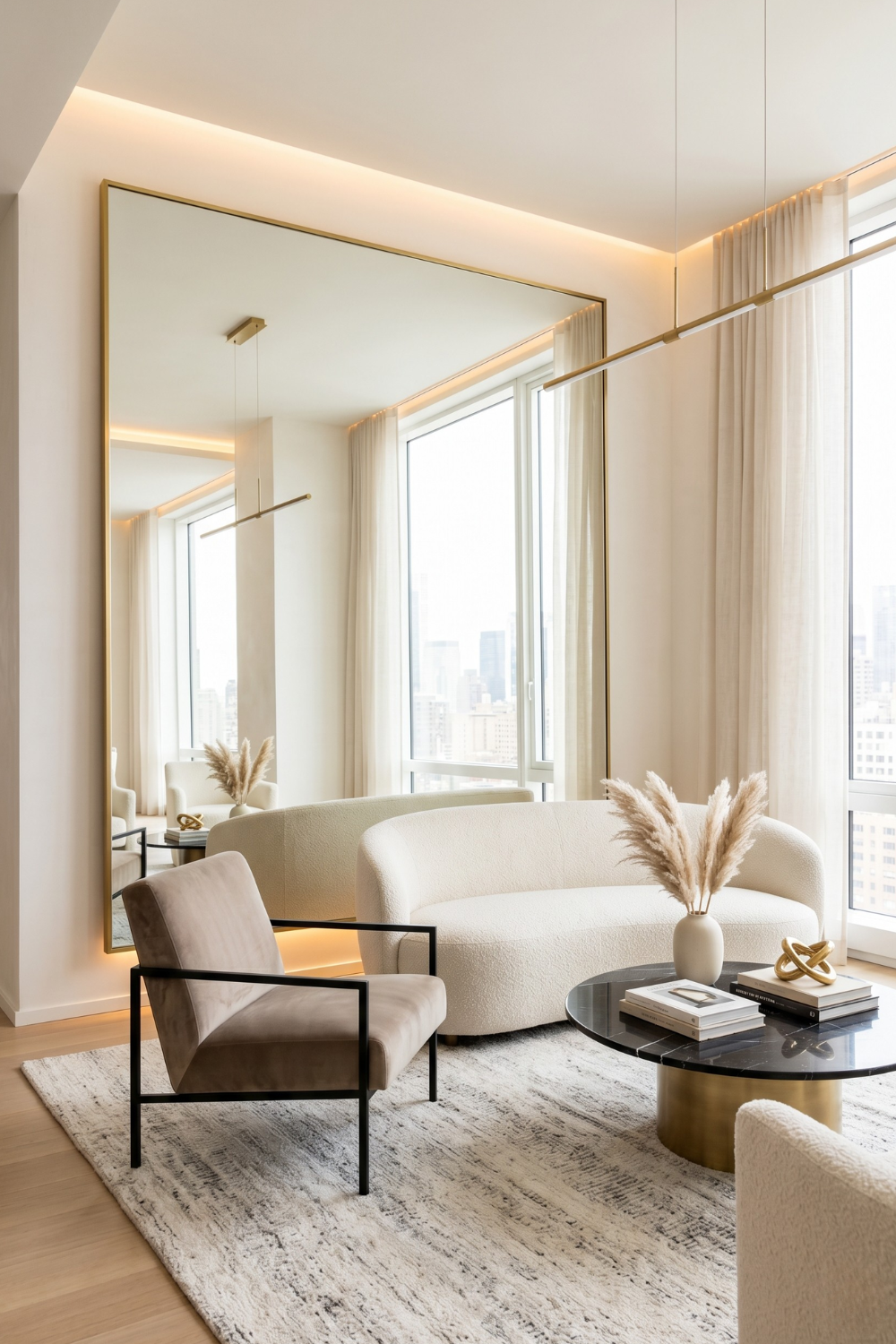
Idea #21: Use Mirrors to Expand Visual Space
Mirrors are a classic trick for making small spaces feel larger. When placed strategically, they reflect light and create the illusion of depth.
Position a large mirror opposite a window to maximize brightness and openness.
This layout technique works beautifully in contemporary, luxury, and Scandinavian interiors.
Mirrors not only enhance light but also add a decorative element without taking up floor space.
It’s one of the easiest ways to visually double your space.
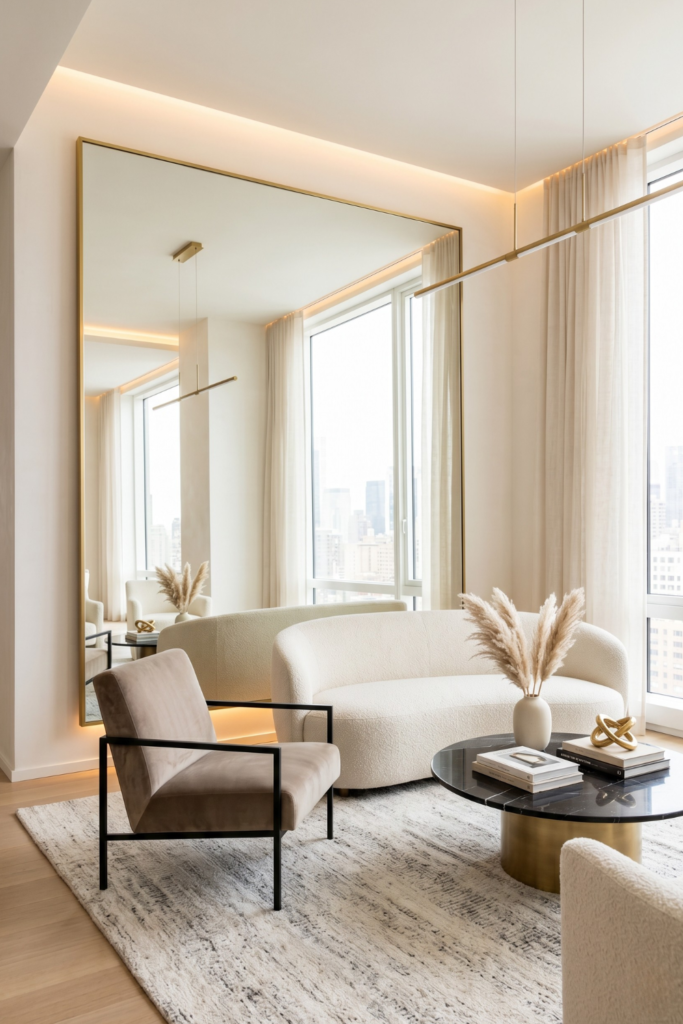
Idea #22: Create a Cozy Corner Seating Nook
If your living room has an unused corner, transform it into a cozy seating nook.
Add a small chair, a side table, and a floor lamp to create a functional and inviting mini zone.
This layout works especially well in boho, rustic, and cozy interiors where layered textures shine.
It adds personality to your space while making use of otherwise wasted areas.
A corner nook can serve as a reading spot or a quiet relaxation area.
Idea #23: Keep Pathways Clear for Better Flow
A cluttered layout can make your living room feel smaller than it actually is. Keeping pathways clear ensures easy movement and improves overall comfort.
Avoid placing furniture in high-traffic areas and maintain at least a small walking space between pieces.
This approach works in all styles but is especially important in minimalist and modern layouts.
Clear pathways create a sense of openness and order.
It’s a simple yet highly effective way to maximize your space.
Idea #24: Mix Open and Closed Storage for Balance
Too much open storage can look cluttered, while too many closed cabinets can feel heavy. A balanced mix creates both function and style.
Use open shelves for decor and closed storage for less attractive items.
This layout strategy works well in transitional, modern, and farmhouse interiors.
It keeps your space organized while maintaining visual interest.
A balanced storage approach enhances both usability and aesthetics.
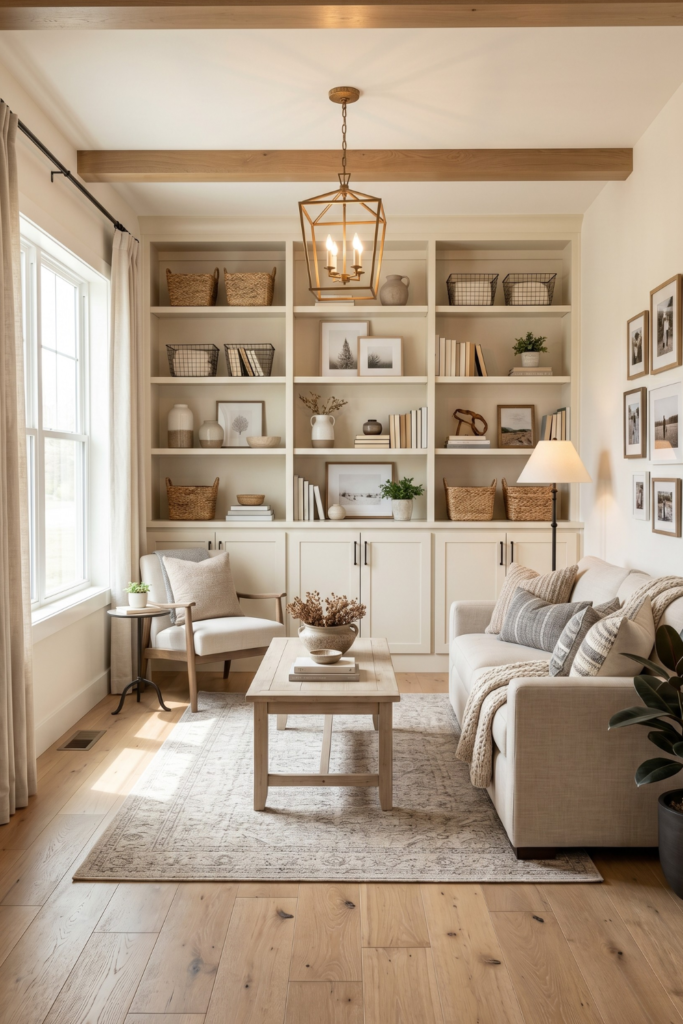
Conclusion
Designing a small living room doesn’t mean compromising on style or comfort. With the right layout strategies, you can transform even the tiniest space into something functional, beautiful, and inviting.
From floating furniture and smart zoning to using vertical space and multi-functional pieces, each idea helps you maximize every inch with intention.
The key is to think strategically, focus on flow, balance, and simplicity. When done right, your small living room can feel open, organized, and effortlessly stylish.