25 Small Space Living Ideas to Maximize Every Corner of Your Home
Struggling to make your small home feel functional without sacrificing style? You’re not alone. Whether you’re living in a compact apartment, a studio, or just trying to make better use of limited space, it can often feel like every corner is a missed opportunity.
The good news? With the right small space living ideas, you can completely transform your home into a space that feels open, organized, and effortlessly stylish. From clever furniture choices to smart layout strategies, small spaces can actually become some of the most beautiful and efficient homes.
In this guide, you’ll discover creative, Pinterest-worthy ideas designed to help you maximize every inch while keeping your space aesthetic, practical, and inviting.
Idea #1: Vertical Storage Walls for Smart Organization
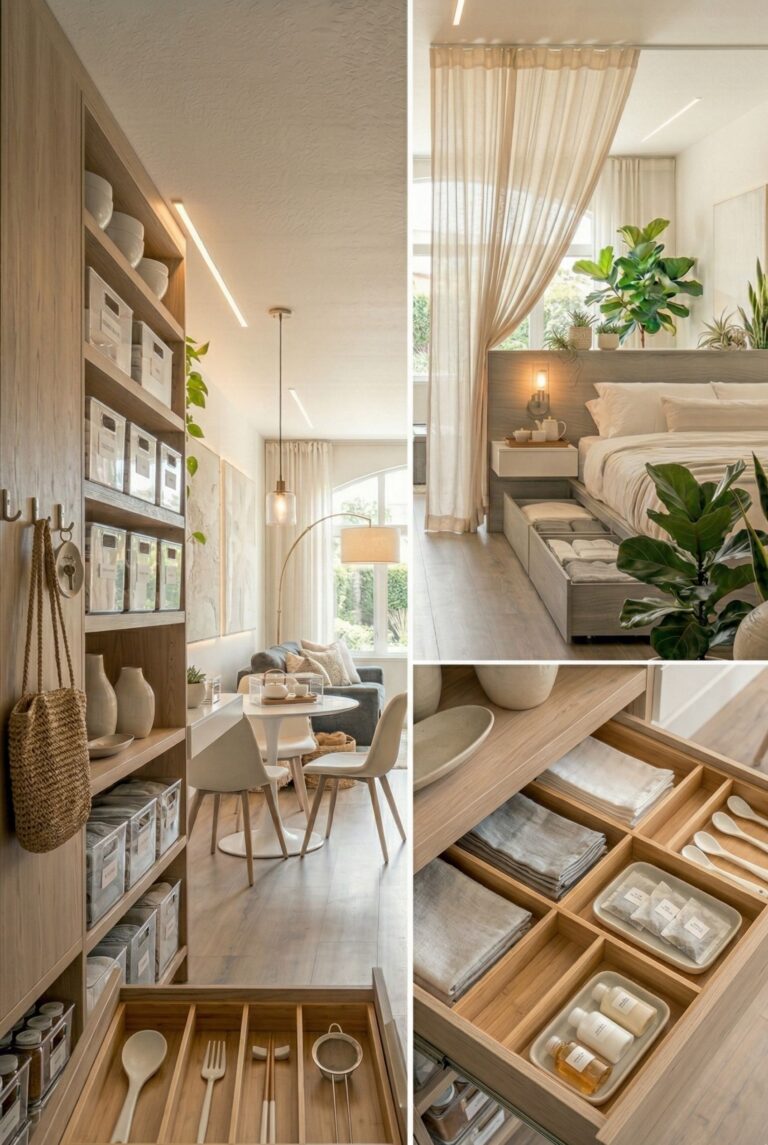
One of the most powerful ways to maximize a small space is by thinking vertically instead of horizontally. Vertical storage walls allow you to utilize unused wall space, freeing up valuable floor area and instantly making your room feel less cluttered.
This idea works beautifully in small living rooms, bedrooms, and even kitchens where storage is often limited. By installing floating shelves, wall-mounted cabinets, or ladder-style shelving, you create a layered and visually appealing storage system.
Vertical storage works because it draws the eye upward, making ceilings feel higher and rooms appear larger. It also keeps essentials within reach while maintaining a clean and organized layout.
To apply this, use light wood or white shelves for a Scandinavian look, or black metal frames for an industrial aesthetic. Add baskets, books, and decorative pieces to keep it functional yet stylish.
Idea #2: Multifunctional Furniture That Saves Space
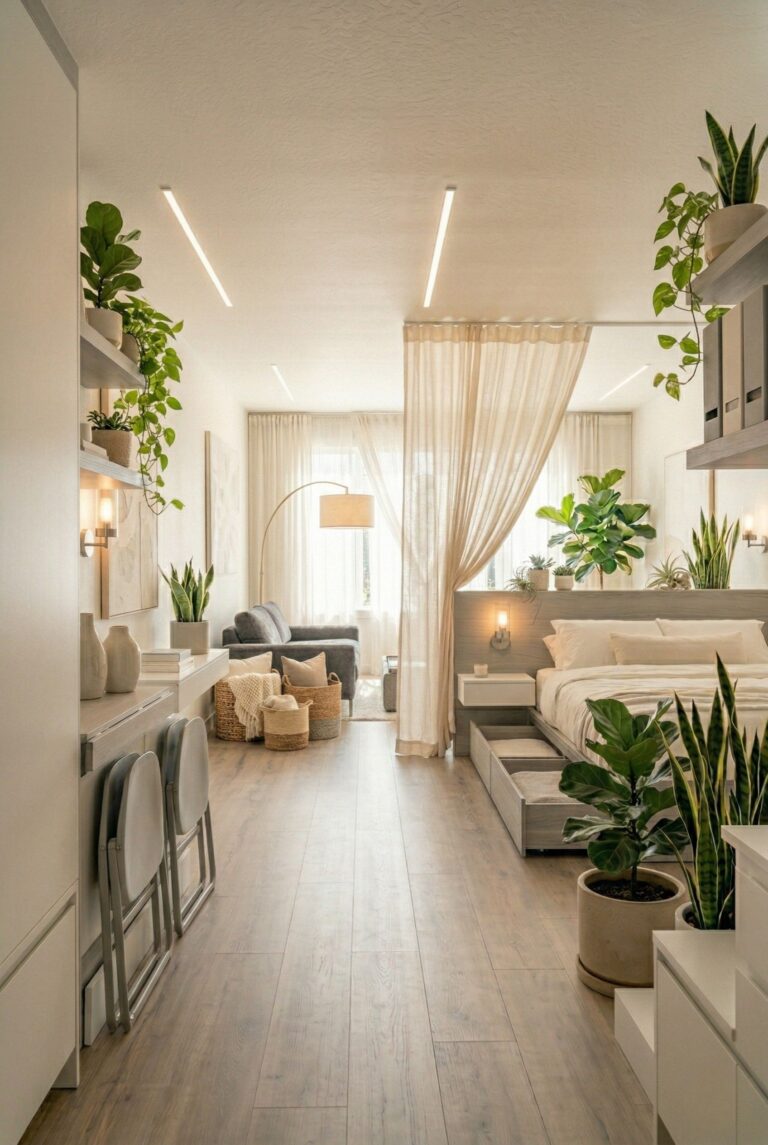
In small homes, every piece of furniture should work harder. Multifunctional furniture is essential for maximizing space while maintaining a clean and uncluttered aesthetic.
Think sofa beds, storage ottomans, extendable dining tables, or beds with built-in drawers. These pieces allow you to combine multiple functions into one, reducing the need for extra furniture.
This approach works especially well in studio apartments or small living rooms where space is limited but functionality is crucial. Instead of crowding the room, you create a streamlined and intentional layout.
To achieve this look, choose modern or minimalist designs with clean lines. Neutral tones help keep the space visually calm, while hidden storage compartments maintain a clutter-free environment.
Idea #3: Light Color Palettes for an Airy Feel
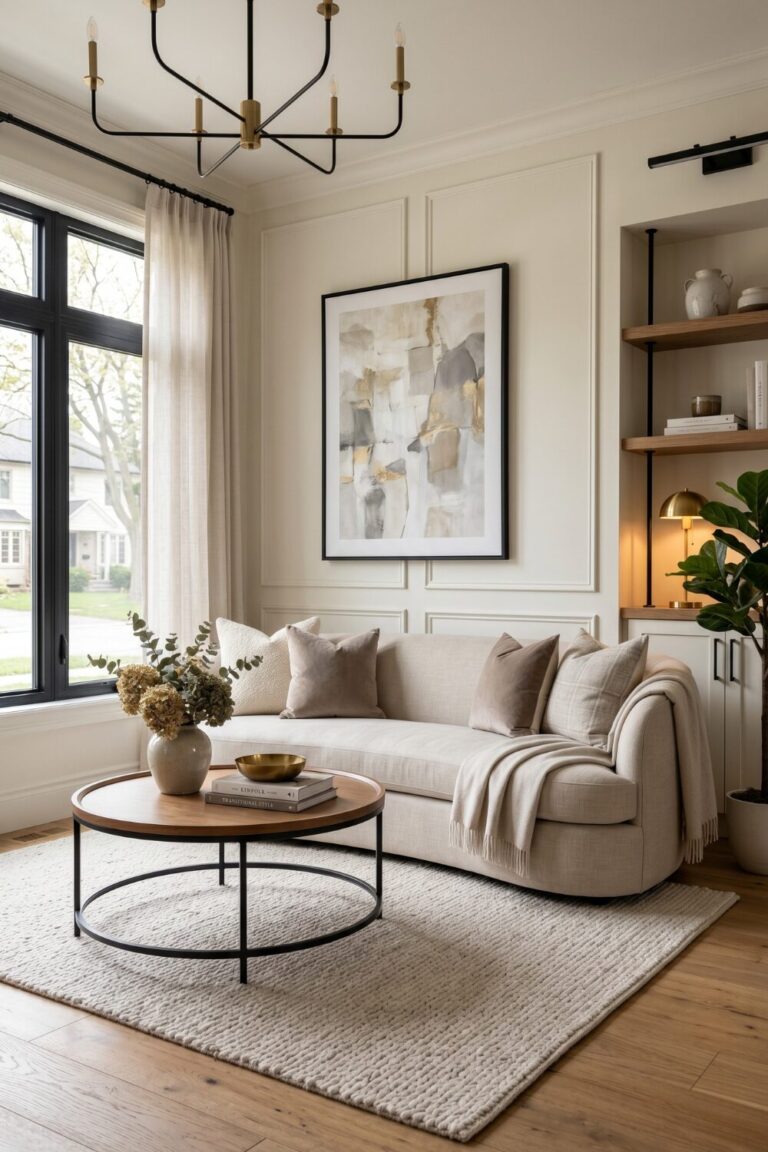
Color plays a huge role in how spacious a room feels. Light and neutral palettes such as white, beige, soft gray, and pastels can make even the smallest spaces feel open and breathable.
This idea works because lighter shades reflect natural light, creating a bright and expansive atmosphere. Dark colors, on the other hand, tend to absorb light and make spaces feel smaller.
Incorporate this by using light tones on walls, large furniture pieces, and rugs. You can still add personality through subtle textures, soft patterns, or muted accent colors.
For a modern or Japandi-inspired look, combine whites with warm wood tones and minimal decor. This creates a calm, clutter-free space that feels both functional and elegant.

Idea #4: Mirrors to Visually Expand the Space
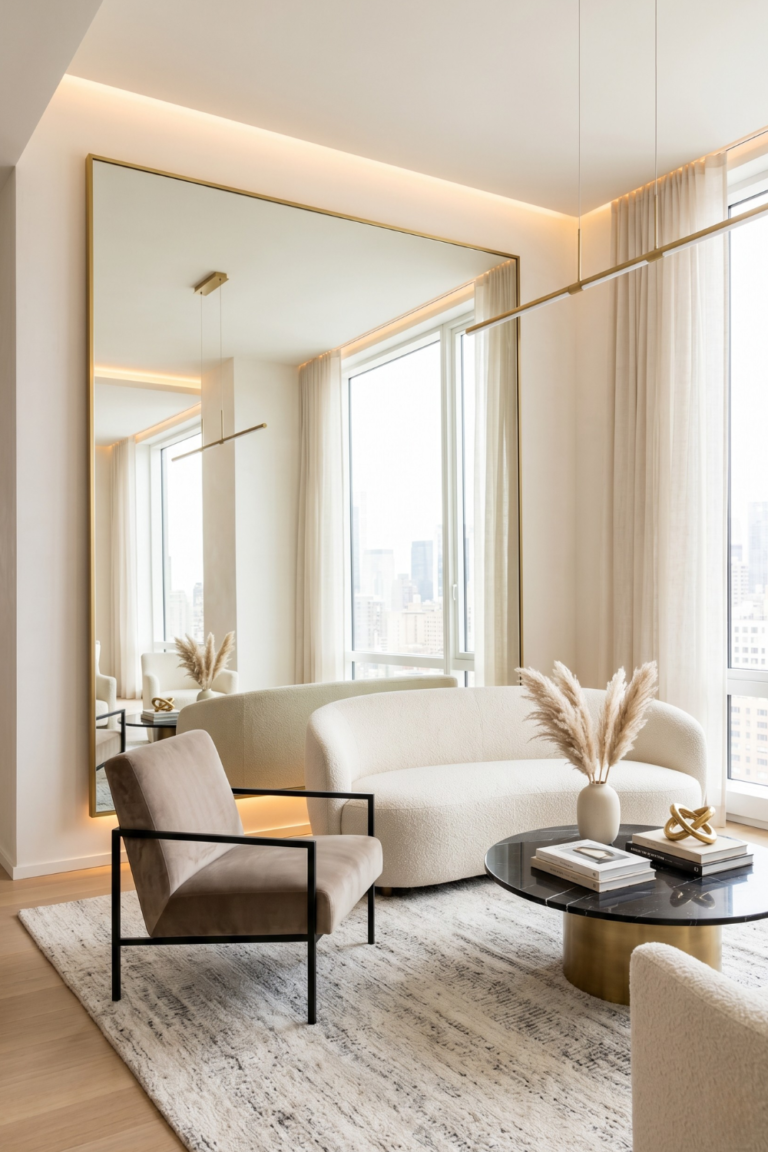
Mirrors are one of the easiest tricks to make a small room feel bigger without any structural changes. They reflect both light and space, instantly creating the illusion of depth.
This works especially well in living rooms, entryways, or bedrooms where natural light is limited. A large mirror placed opposite a window can double the brightness in the room.
To apply this idea, choose oversized mirrors for a bold statement or multiple smaller mirrors for a decorative gallery effect. Frameless or thin-framed mirrors work best for a modern or minimalist look.
This simple addition can dramatically enhance the openness of your space while also adding a stylish design element.
Idea #5: Hidden Storage Solutions for a Clean Look
Clutter is the biggest enemy of small spaces. Hidden storage solutions help you keep everything organized while maintaining a sleek, uncluttered appearance.
This includes beds with storage drawers, coffee tables with compartments, benches with hidden storage, and wall-mounted units with concealed shelves.
The beauty of hidden storage is that it keeps your essentials out of sight, making your space feel more open and intentional. It’s especially useful in small apartments where storage is limited.
To implement this, choose furniture with built-in storage and keep surfaces as clean as possible. This creates a polished, high-end look without sacrificing practicality.
Idea #6: Open Shelving for Style & Function
Open shelving is a perfect blend of storage and decor. It allows you to display your favorite items while keeping essentials easily accessible.
This idea works well in kitchens, living rooms, and even bathrooms. It creates a sense of openness compared to bulky cabinets, making the space feel lighter.
To style open shelves, use a mix of functional items and decorative pieces like plants, books, and ceramics. Stick to a cohesive color palette to avoid visual clutter.
For a modern or boho vibe, mix natural textures like wood and woven baskets. This adds warmth and personality while keeping the space organized.

Idea #7: Foldable & Expandable Furniture
Foldable furniture is a game-changer for small spaces. It allows you to adapt your space based on your needs without permanently taking up room.
Examples include fold-down desks, wall-mounted dining tables, and collapsible chairs. These pieces can be tucked away when not in use, freeing up valuable floor space.
This idea is perfect for multifunctional rooms, especially in studio apartments. It gives you flexibility without compromising style.
To make it aesthetically pleasing, choose sleek designs in neutral tones or natural wood finishes. This ensures the furniture blends seamlessly into your space.
Idea #8: Zoning Small Spaces with Rugs & Lighting
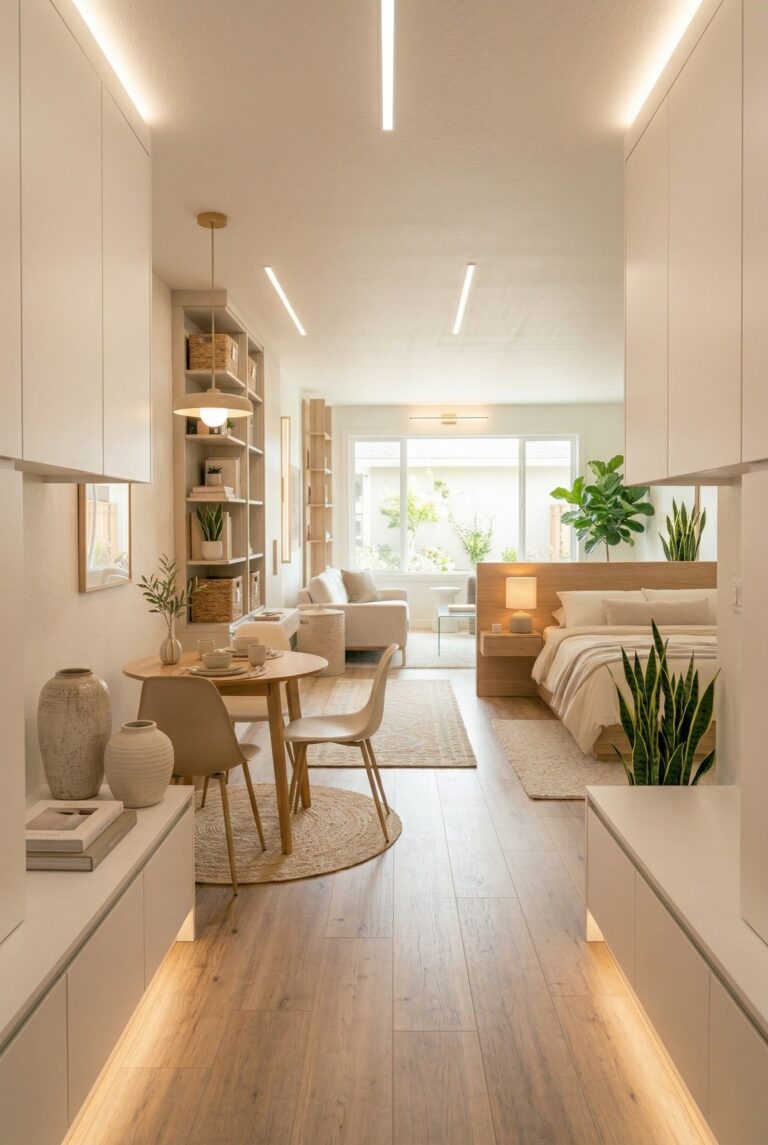
Even in small homes, defining different areas is essential. Zoning helps create structure and makes your space feel more organized and intentional.
You can use rugs, lighting, or furniture placement to visually separate areas like the living room, dining space, or workspace.
This works because it adds depth and functionality without the need for walls. It’s especially useful in open-plan apartments.
To apply this, use different rugs for each zone and layer lighting such as floor lamps or pendant lights to define each area.
Idea #9: Floating Furniture Layouts
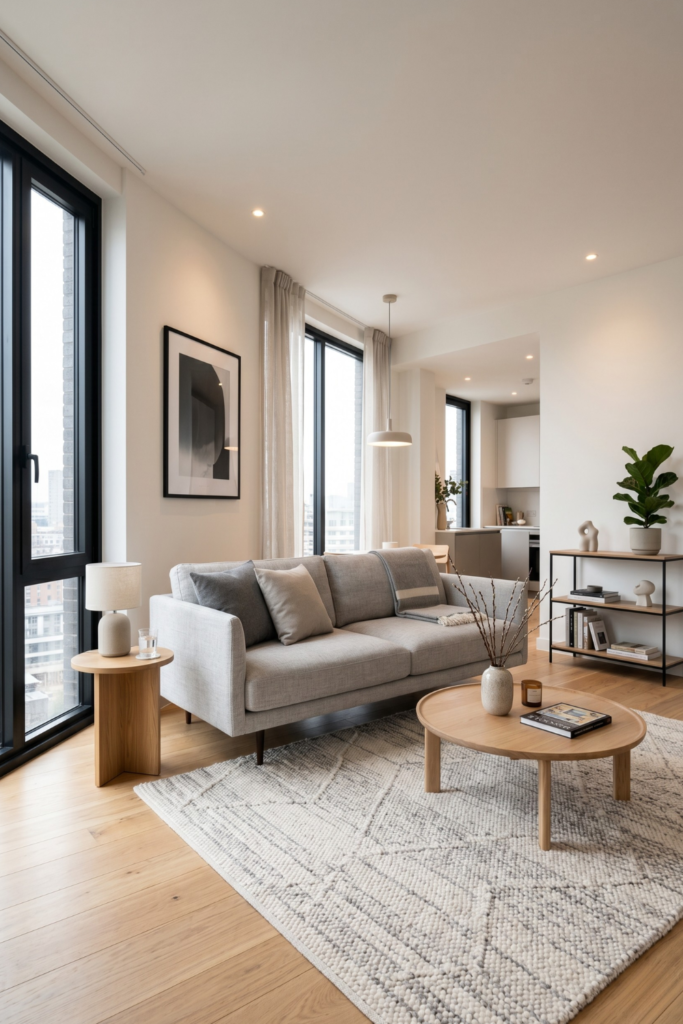
Instead of pushing all furniture against the walls, try floating key pieces like sofas or tables slightly away from the edges.
This might seem counterintuitive, but it actually creates a more balanced and spacious layout. It allows better flow and prevents the room from feeling cramped.
This layout works best in small living rooms where strategic spacing can make a big difference.
To achieve this, leave small gaps between furniture and walls, and use area rugs to anchor the layout.
Idea #10: Under-Bed Storage for Hidden Efficiency
The space under your bed is often underutilized. Using it for storage can significantly increase your home’s functionality.
You can use storage boxes, built-in drawers, or lift-up beds to store seasonal items, clothing, or extra bedding.
This idea works especially well in small bedrooms where closet space is limited.
Choose clean, organized storage solutions to maintain a tidy look. Neutral or matching containers keep everything visually cohesive.
Idea #11: Glass & Acrylic Furniture for Visual Lightness
Transparent furniture like glass tables or acrylic chairs creates the illusion of more space by reducing visual weight.
Because these pieces don’t block the view, they make rooms feel more open and less crowded.
This works particularly well in modern and minimalist interiors.
Pair glass furniture with soft textures and neutral tones to maintain a balanced and inviting atmosphere.
Idea #12: Built-In Furniture for Seamless Design
Built-in furniture is one of the most efficient ways to maximize space. It utilizes every inch and creates a custom, high-end look.
Examples include built-in wardrobes, benches, and shelving units.
This approach works because it eliminates wasted space and creates a clean, cohesive design.
For best results, keep the color palette consistent with your walls to maintain a seamless appearance.
Idea #13: Slimline Furniture for Narrow Spaces
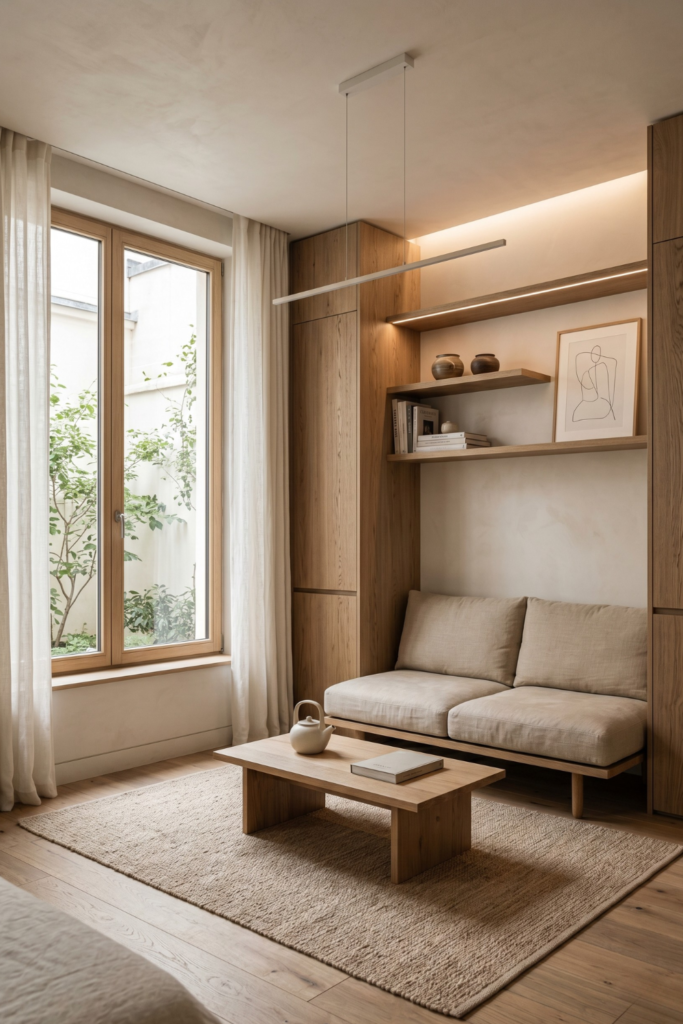
When working with limited square footage, bulky furniture can quickly overwhelm a room. Slimline furniture is designed with smaller proportions, making it perfect for tight spaces without sacrificing comfort or style.
This idea works especially well in narrow living rooms, hallways, or compact bedrooms. Pieces like slim sofas, narrow console tables, and armless chairs help maintain flow while still offering functionality.
Slim furniture creates breathing room, allowing pathways to remain open and the layout to feel less crowded. It also gives your space a more refined, modern look.
To apply this, choose furniture with thin legs, low profiles, and streamlined silhouettes. Scandinavian and modern styles are ideal for achieving this balanced, airy feel.
Idea #14: Ceiling-to-Floor Curtains for Height Illusion
One of the simplest ways to make a small space feel taller is by installing curtains that extend from ceiling to floor. This design trick draws the eye upward, creating the illusion of higher ceilings.
This works beautifully in living rooms and bedrooms, especially in apartments where ceiling height may feel limited.
Long curtains add elegance while visually expanding vertical space. Light fabrics like linen or sheer materials enhance the airy effect.
To achieve this look, mount curtain rods as close to the ceiling as possible and let the fabric gently touch the floor. Neutral tones work best for maintaining a cohesive aesthetic.
Idea #15: Corner Utilization for Maximum Efficiency
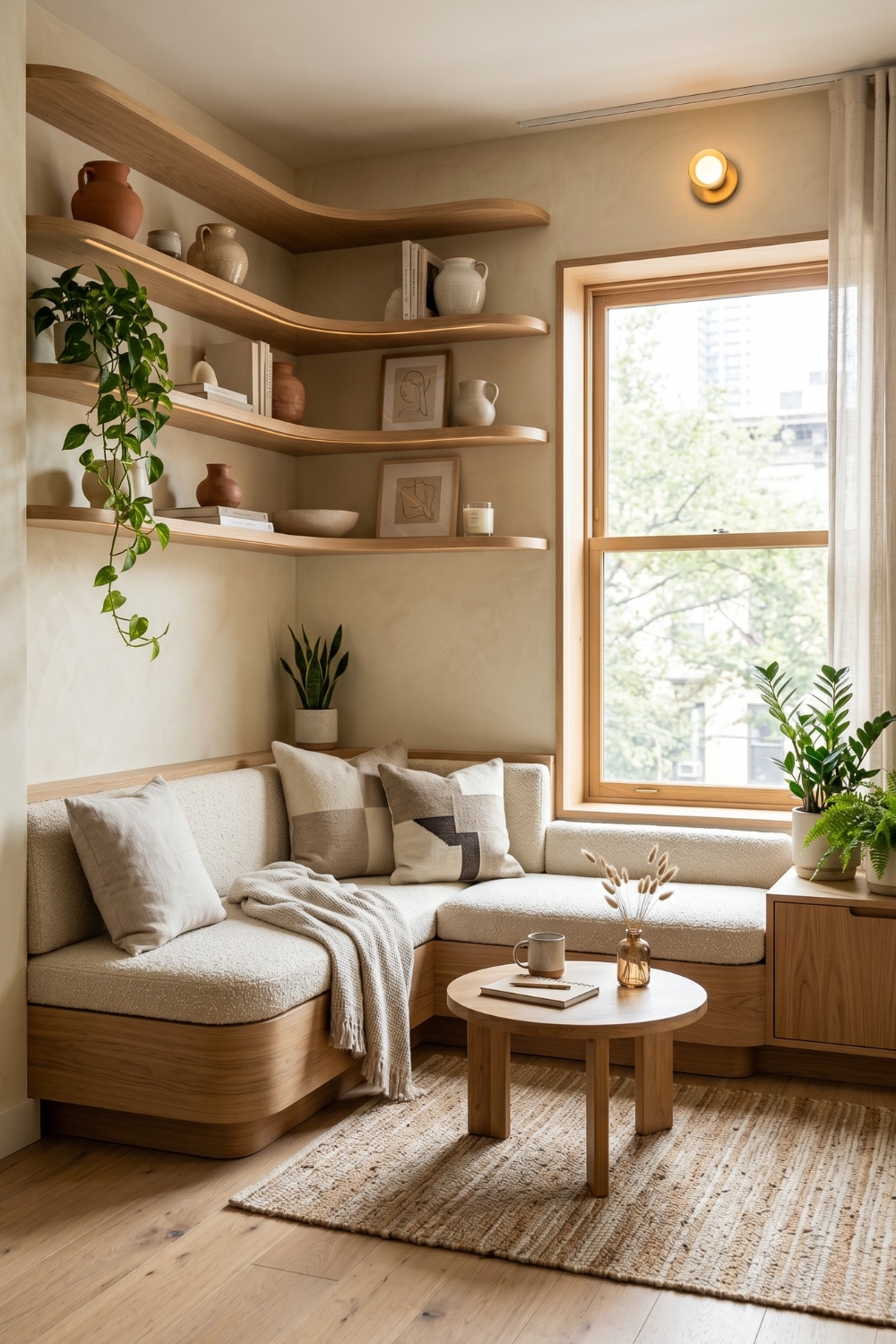
Corners are often overlooked, but they hold incredible potential in small homes. Utilizing corners effectively can unlock hidden space for storage, seating, or decor.
You can add corner shelves, L-shaped sofas, or compact desks to make the most of these areas. This is especially useful in studio apartments or small living rooms.
This idea works because it transforms unused areas into functional zones, helping you maximize every inch of your home.
To implement it, choose furniture specifically designed for corners and keep the styling minimal to avoid overcrowding.
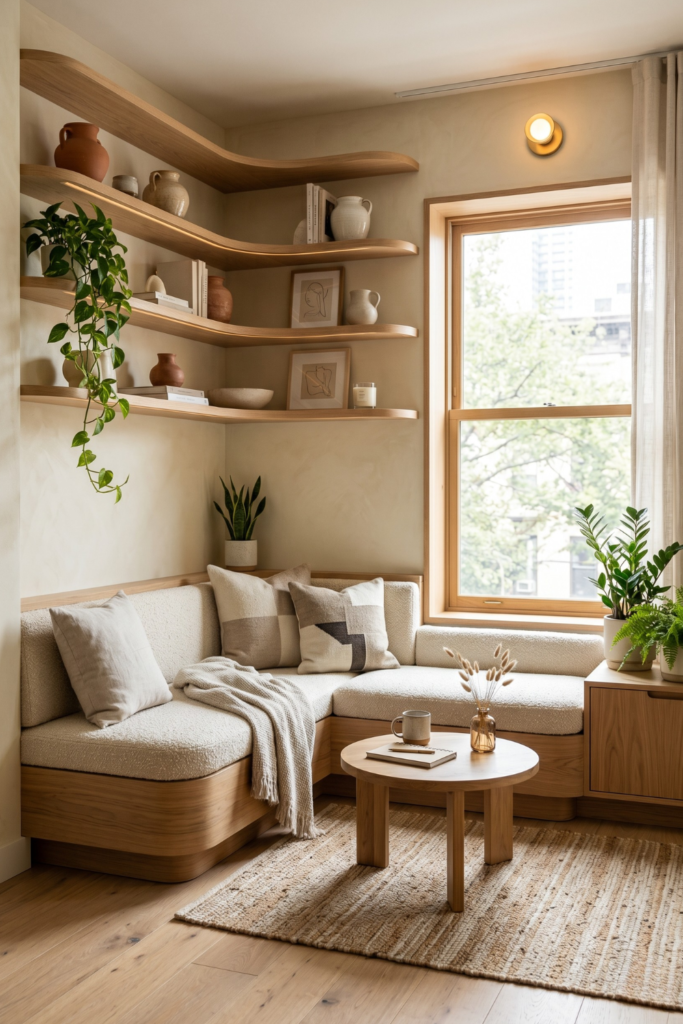
Idea #16: Layered Lighting for Depth and Warmth
Lighting can completely transform how a space feels. Instead of relying on a single overhead light, layered lighting adds depth, warmth, and dimension.
Use a combination of ceiling lights, floor lamps, table lamps, and wall sconces to create a balanced lighting scheme.
This works because it eliminates harsh shadows and highlights different areas of the room, making it feel more dynamic and spacious.
Warm lighting tones also create a cozy yet elevated atmosphere, perfect for small homes.
To apply this, focus on soft, diffused lighting and place light sources at different heights for a more sophisticated look.
Idea #17: Minimalist Decor to Reduce Visual Clutter
In small spaces, less truly is more. Minimalist decor helps reduce visual noise, making your home feel cleaner, calmer, and more spacious.
This approach focuses on intentional design, keeping only what you need and love while eliminating excess.
It works because clutter can make even a large room feel cramped, while simplicity creates openness and clarity.
To achieve this, stick to a limited color palette, choose a few statement decor pieces, and keep surfaces clean.
Japandi and modern minimalist styles are perfect for this aesthetic.
Idea #18: Multi-Zone Furniture Layouts for Flexibility
Creating multiple functional zones within a small space can make your home feel larger and more efficient.
For example, a living room can also serve as a workspace or dining area with the right layout.
This works because it maximizes functionality without requiring additional rooms.
To implement this, use furniture placement, rugs, or shelving units to define each zone clearly.
Choose versatile furniture that can adapt to different uses, keeping the design cohesive.
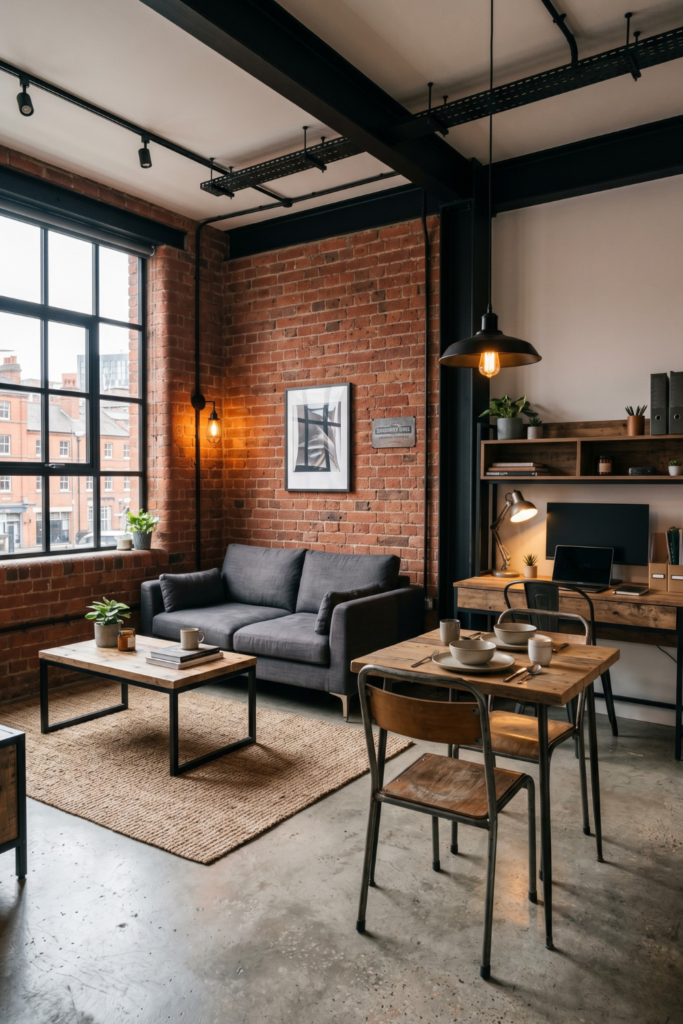
Idea #19: Wall-Mounted Desks for Compact Workspaces
With more people working from home, creating a functional workspace in a small area is essential. Wall-mounted desks are a perfect solution.
These desks take up minimal space and can often be folded away when not in use.
This idea works well in bedrooms, living rooms, or even hallways where space is limited.
It keeps the area clean and uncluttered while still providing a practical workspace.
To style it, pair the desk with a sleek chair and minimal accessories for a modern, efficient setup.
Idea #20: Statement Rugs to Anchor the Space
A well-chosen rug can define your space and make it feel more cohesive. In small homes, rugs help anchor furniture and create visual structure.
This works because it ties elements together, making the room feel intentional rather than scattered.
Choose rugs that complement your color palette and fit your layout properly—too small can make the space feel disjointed.
Layering rugs can also add texture and depth, especially in boho or cozy interiors.
Idea #21: Sliding Doors for Space Efficiency
Traditional doors take up valuable space when they swing open. Sliding doors are a smart alternative that saves room while adding a modern touch.
They work especially well for closets, bathrooms, or separating spaces in small apartments.
This idea maximizes floor space and creates a cleaner, more streamlined look.
To apply this, choose sleek glass panels for a modern feel or wood finishes for a warmer, rustic aesthetic.

Idea #22: Elevated Furniture for an Open Feel
Furniture with raised legs creates the illusion of more space by allowing you to see more of the floor.
This makes the room feel lighter and less crowded compared to bulky, ground-level furniture.
This idea works especially well in living rooms and bedrooms where visual openness is key.
To achieve this look, choose sofas, beds, and cabinets with slim, elevated legs. Stick to light or neutral tones for an even more spacious feel.
Idea #23: Smart Entryway Storage Solutions
Even the smallest homes need an organized entryway. Smart storage solutions like wall hooks, slim benches, and vertical shelves can keep things tidy.
This works because it prevents clutter from spreading into the rest of your home.
Use compact furniture and keep the design simple to maintain a clean, welcoming look.
Add baskets or trays for shoes and accessories to keep everything organized.
Idea #24: Compact Dining Areas That Still Feel Stylish
You don’t need a large space to enjoy a beautiful dining area. Compact dining setups can be both functional and stylish.
Use small round tables, foldable options, or wall-mounted dining surfaces to save space.
This idea works because it creates a designated dining zone without overwhelming the room.
Choose chairs that can be tucked in neatly and keep decor minimal for a clean, modern aesthetic.
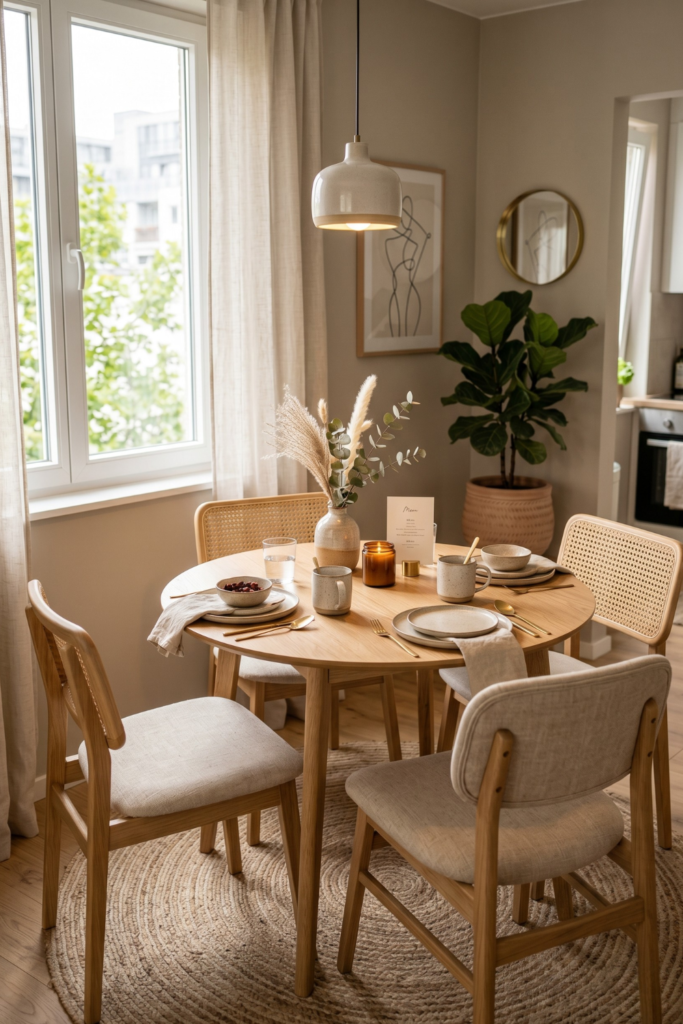
Idea #25: Mirrors + Lighting Combo for Maximum Brightness
Combining mirrors with strategic lighting can dramatically enhance the brightness and openness of your space.
This works because mirrors reflect both natural and artificial light, amplifying the overall effect.
It’s especially useful in darker rooms or apartments with limited windows.
To apply this, place mirrors near light sources and use warm lighting to create a soft, inviting glow.
This simple trick can make your home feel significantly larger and more luxurious.
Conclusion
Small spaces don’t limit your creativity, they actually push you to design smarter, more intentional interiors. By using clever layouts, multifunctional furniture, and visually expanding techniques, you can turn every corner of your home into something both beautiful and useful.
The key is to focus on balance: combining style with functionality while keeping your space clutter-free and cohesive. Whether you prefer minimalist calm, cozy boho layers, or modern elegance, these ideas help you create a home that feels spacious, stylish, and uniquely yours.