
18 Minimalist Living Room Ideas for a Simple and Elegant Home
Struggling to make your living room feel calm, stylish, and not overcrowded? You’re not alone. Many spaces end up feeling cluttered, mismatched, or visually heavy, even when filled with beautiful furniture.
That’s where minimalist living room ideas come in. By focusing on simplicity, intentional design, and clean aesthetics, you can transform your space into something that feels open, elegant, and effortlessly modern. Minimalism isn’t about having less for the sake of it, it’s about creating a space that feels better to live in.
In this guide, you’ll discover minimalist living room ideas that combine beauty with function, helping you design a home that feels peaceful, refined, and Pinterest-worthy without overcomplicating things.
Idea #1: Soft Neutral Color Palette Foundation
A minimalist living room begins with a soft, neutral color palette that sets a calm and cohesive tone throughout the space. Shades like warm white, beige, light taupe, and soft gray create an airy atmosphere that instantly makes the room feel more open and elegant.
These colors work beautifully because they reflect natural light, helping even smaller living rooms appear brighter and more spacious. Instead of overwhelming the eye with bold contrasts, neutral tones create harmony and balance, which is essential in minimalist design.
To apply this idea, start with your walls and larger furniture pieces like sofas and rugs. Choose consistent tones across these elements to create a seamless flow. Add subtle variation through textures like linen cushions or woven throws to avoid the space feeling flat.
Key elements include a neutral sofa, light-toned rug, sheer curtains, and minimal wall decor. This foundation allows every piece in your living room to feel intentional and visually soothing.
Idea #2: Low-Profile Furniture for Clean Lines
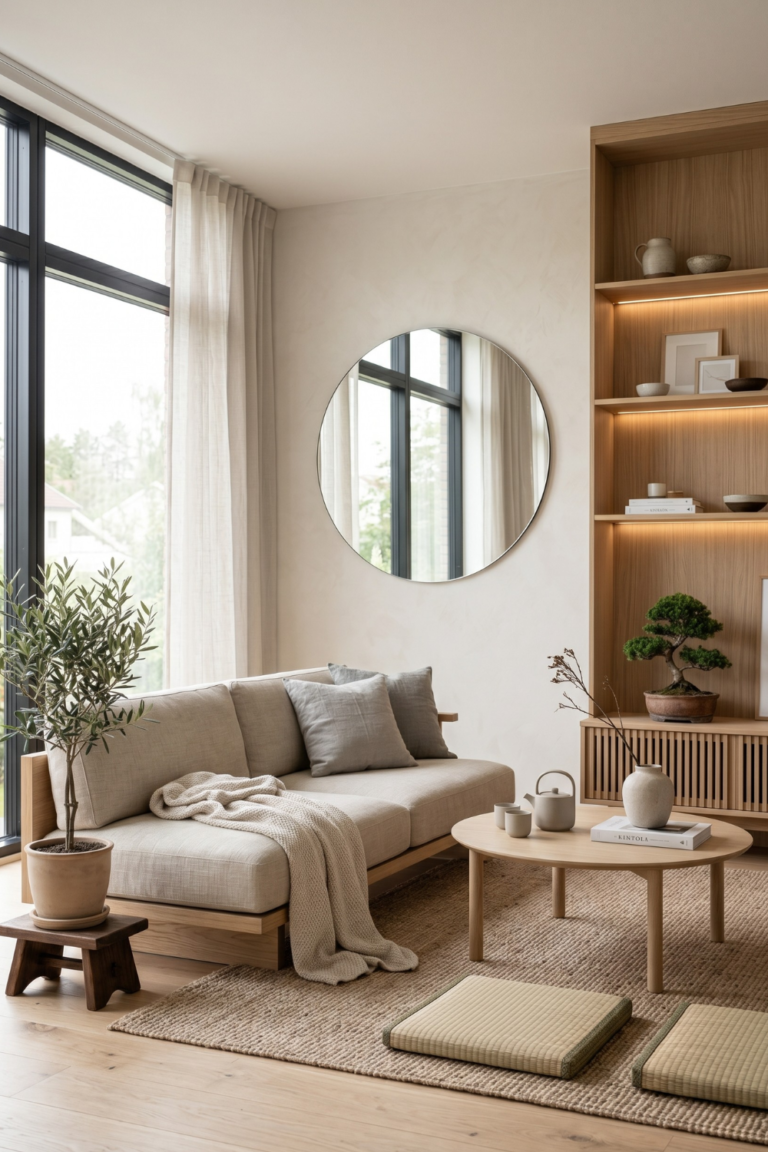
Low-profile furniture is a signature element in minimalist interiors, especially in modern and Japandi-inspired spaces. Sofas, coffee tables, and chairs that sit closer to the ground create a horizontal visual flow that makes the room feel more expansive and grounded.
This works because lower furniture reduces visual clutter and keeps the sightline open, which is particularly beneficial in smaller living rooms. It also contributes to a relaxed and contemporary aesthetic that feels effortlessly stylish.
To achieve this look, choose a sleek, low-height sofa with clean lines and avoid bulky or overly decorative designs. Pair it with a simple wooden or stone coffee table and minimal accent chairs.
Focus on quality over quantity, fewer pieces with strong design presence create a more impactful space. Keep surrounding decor minimal to let the furniture stand out without overwhelming the room.
Idea #3: Decluttered Surfaces with Intentional Decor
Minimalism thrives on clean, uncluttered surfaces that allow the space to breathe. Instead of filling every shelf or table, focus on a few carefully chosen decor pieces that add personality without overwhelming the room.
This approach works because it reduces visual noise and makes each item feel more meaningful. A single ceramic vase, a stack of curated books, or a sculptural object can create more impact than multiple smaller items scattered around.
To implement this idea, clear off coffee tables, consoles, and shelves, then reintroduce only essential or aesthetically pleasing items. Use the “less but better” rule, every object should serve a purpose or enhance the visual appeal.
Key elements include neutral-toned decor, clean-lined trays, and natural materials like stone or wood. This creates a refined and elegant look that feels calm and intentional rather than empty.
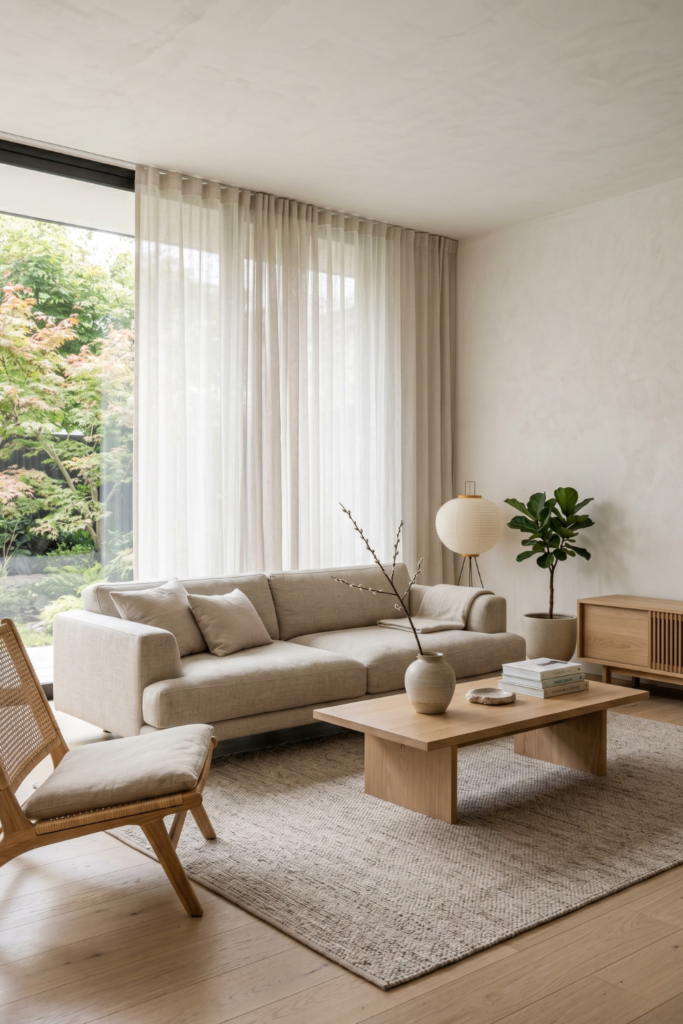
Idea #4: Natural Light as the Main Feature
One of the most powerful minimalist design elements is natural light. Instead of relying heavily on artificial lighting, minimalist living rooms embrace sunlight as a core feature that enhances the overall atmosphere.
Natural light works beautifully because it highlights textures, softens colors, and creates a dynamic yet calming environment throughout the day. It also makes the space feel larger and more welcoming without adding extra decor.
To maximize natural light, keep window treatments light and airy. Opt for sheer curtains or minimal blinds that allow sunlight to flow freely into the room. Avoid heavy drapes that block light and make the space feel closed off.
Position furniture in a way that doesn’t obstruct windows, and use mirrors strategically to reflect light across the room. The result is a bright, fresh space that feels effortlessly elegant.
Idea #5: Minimalist Wall Art with Subtle Impact
Wall decor in a minimalist living room should be simple yet impactful. Instead of gallery walls or busy arrangements, choose one or two large-scale pieces that complement the overall aesthetic.
This works because it creates a focal point without adding clutter. Large artwork with soft tones, abstract patterns, or nature-inspired designs enhances the space while maintaining visual calmness.
To apply this idea, select artwork that aligns with your color palette, think black-and-white prints, muted landscapes, or textured canvases. Keep frames simple, such as thin black or wooden frames, to maintain a clean look.
Avoid overcrowding walls with multiple pieces. Let negative space play a role in the design, it’s just as important as the decor itself in minimalist interiors.
Idea #6: Hidden Storage for a Clutter-Free Look
Storage is essential in maintaining a minimalist living room. The key is to keep it hidden or seamlessly integrated into the design so that it doesn’t disrupt the clean aesthetic.
Hidden storage works because it allows you to keep everyday items organized without visual clutter. This helps maintain the calm and polished look that defines minimalist spaces.
To incorporate this idea, choose furniture with built-in storage, such as ottomans, coffee tables with compartments, or sleek cabinets. Use closed shelving instead of open shelves to keep items out of sight.
Stick to a consistent color palette for storage units so they blend into the room rather than stand out. This ensures the space remains visually cohesive and uncluttered.
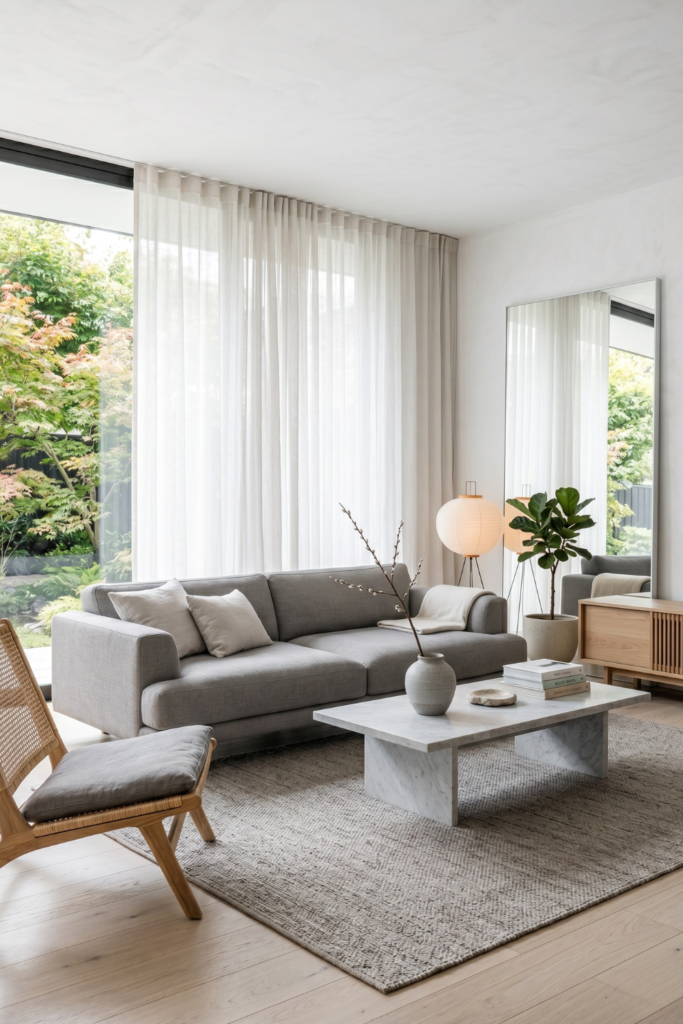
Idea #7: Layered Textures Instead of Bold Colors
In minimalist design, texture replaces color as the main way to add depth and interest. Instead of using bright or contrasting colors, layering different materials creates a rich and inviting look.
This works because it keeps the space visually engaging while maintaining a soft and cohesive palette. Textures like linen, wool, wood, and stone add warmth without overwhelming the design.
To achieve this, combine a linen sofa with a textured rug, add a knitted throw, and incorporate wooden or ceramic decor elements. The variation in materials creates subtle contrast that feels sophisticated and balanced.
Focus on tactile elements that make the space feel comfortable and lived-in, while still maintaining a clean and minimalist aesthetic.
Idea #8: Statement Lighting with Simple Design
Lighting in a minimalist living room should be functional yet visually striking. A well-chosen light fixture can act as a subtle statement piece without overpowering the space.
This works because it adds character while still maintaining simplicity. Sculptural pendant lights, sleek floor lamps, or modern chandeliers can elevate the room’s design effortlessly.
Choose lighting with clean lines and neutral finishes like matte black, brushed brass, or soft white. Avoid overly decorative fixtures that clash with the minimalist theme.
Position lighting strategically to highlight key areas like seating or artwork, enhancing both functionality and aesthetics.
Idea #9: Open Space Layout with Breathing Room
Minimalist living rooms prioritize open space and thoughtful layout. Instead of filling every corner, leaving intentional empty areas allows the room to feel larger and more balanced.
This works because negative space creates visual clarity and makes the room feel more relaxing. It prevents the space from feeling crowded or overwhelming.
To implement this, arrange furniture with enough distance between pieces to create flow. Avoid pushing everything against the walls instead, create a balanced layout that feels natural and functional.
Focus on fewer, well-placed items rather than trying to fill the room. This approach enhances both comfort and visual appeal.
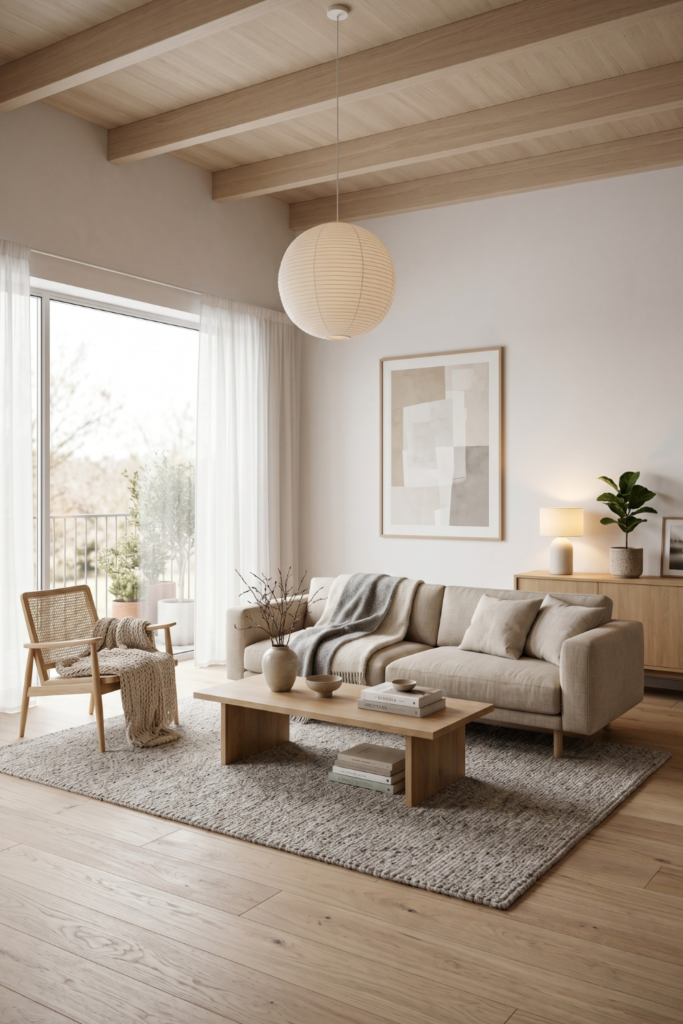
Idea #10: Warm Wood Accents for Natural Balance
While minimalist design often leans toward clean and neutral tones, adding warm wood accents introduces a sense of balance and organic warmth. Elements like oak, walnut, or light ash prevent the space from feeling too cold or sterile.
This works because natural materials soften the sharpness of minimalism, creating a space that feels both modern and inviting. Wood also adds subtle contrast without disrupting the neutral color palette.
To apply this idea, incorporate wooden coffee tables, side tables, or shelving. You can also add wood through flooring, wall panels, or decorative elements like trays and bowls.
Keep finishes simple and avoid overly ornate designs. The goal is to enhance the minimalist aesthetic while maintaining a natural, grounded feel that adds depth and comfort.
Idea #11: Monochrome Styling for a Sophisticated Look
A monochrome color scheme is a powerful way to create a cohesive and elegant minimalist living room. By using different shades of the same color, you can achieve a polished and high-end aesthetic.
This works because it eliminates visual clutter while still allowing depth and variation. For example, layering whites, creams, and soft grays creates a serene environment that feels luxurious without being overwhelming.
To achieve this, select one main color and build your design around it. Use lighter and darker variations across furniture, textiles, and decor to create contrast without introducing new colors.
Incorporate subtle textures to prevent the space from feeling flat. This approach results in a refined and harmonious living room that feels effortlessly stylish.
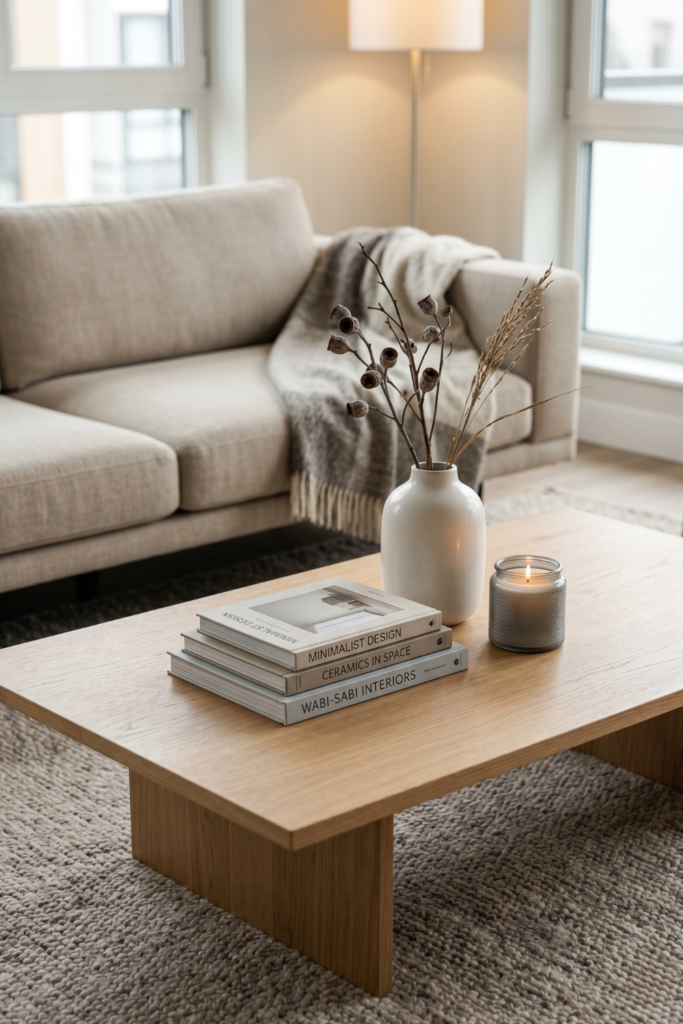
Idea #12: Minimalist Coffee Table Styling
The coffee table is often the focal point of a living room, making it the perfect place to showcase minimalist styling. Instead of overcrowding it, keep the decor simple and intentional.
This works because it keeps the visual weight balanced and prevents the room from feeling cluttered. A few carefully chosen items can create a strong design statement without overwhelming the space.
To style your coffee table, use a combination of elements like a small stack of books, a ceramic vase, or a candle. Group items in odd numbers and keep spacing intentional.
Choose decor that aligns with your overall color palette and style. Avoid mixing too many materials or colors, as this can disrupt the clean aesthetic.
Idea #13: Indoor Plants for Subtle Freshness
Adding greenery is one of the easiest ways to bring life into a minimalist living room without disrupting its simplicity. Indoor plants introduce color, texture, and a natural element that enhances the overall atmosphere.
This works because plants provide contrast against neutral tones while maintaining a calm and organic feel. They also improve the visual softness of the space.
To apply this idea, choose low-maintenance plants like snake plants, fiddle leaf figs, or olive trees. Use simple planters in neutral tones like white, beige, or black.
Avoid overcrowding the space with too many plants. Instead, focus on one or two statement plants placed strategically near windows or corners.
Idea #14: Floating Shelves with Minimal Decor
Floating shelves are a great way to add storage and display space while maintaining a clean and modern look. Their streamlined design aligns perfectly with minimalist principles.
This works because floating shelves create visual interest without adding bulk. They also allow you to showcase a few curated items while keeping the overall design uncluttered.
To style them, use a mix of books, small decor objects, and perhaps a plant. Keep spacing consistent and avoid overcrowding.
Stick to a limited color palette and cohesive materials to maintain harmony. This ensures the shelves enhance the room rather than distract from it.
Idea #15: Light and Airy Curtains for Softness
Curtains in a minimalist living room should enhance natural light while adding softness to the space. Heavy fabrics can make the room feel closed off, while light materials create an open and breezy feel.
This works because sheer or lightweight curtains allow sunlight to filter through, creating a warm and inviting atmosphere without overwhelming the design.
Choose fabrics like linen or cotton in neutral tones such as white, cream, or soft gray. Hang curtains higher than the window frame to create the illusion of taller ceilings.
Keep the design simple and avoid patterns or heavy detailing. The result is a clean, elegant look that complements the minimalist aesthetic beautifully.
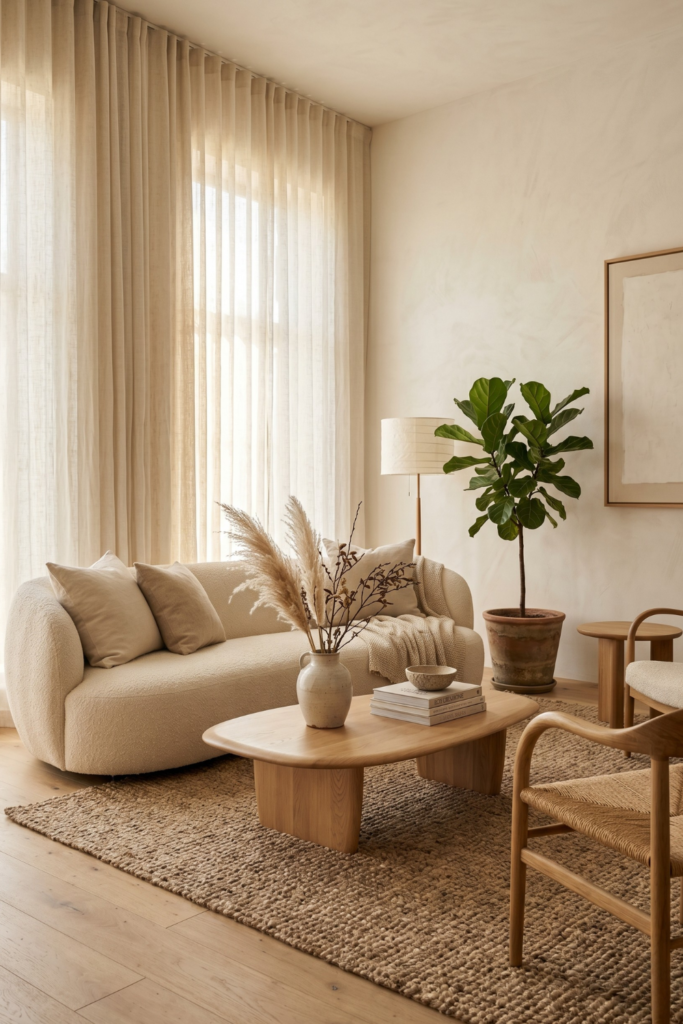
Idea #16: Sculptural Decor Pieces for Subtle Interest
Minimalist spaces benefit from decor that feels intentional and artistic. Sculptural pieces add character without cluttering the room.
This works because a single well-designed object can act as a focal point, drawing attention without overwhelming the space. It adds personality while maintaining simplicity.
To incorporate this idea, choose decor items like abstract sculptures, ceramic art pieces, or uniquely shaped vases. Place them on coffee tables, shelves, or consoles.
Keep the number of items minimal and ensure they align with your color palette. This creates a refined and curated look.
Idea #17: Minimalist Rug with Soft Texture
A rug can anchor your living room while adding warmth and texture. In minimalist design, rugs should be subtle and cohesive rather than bold and overpowering.
This works because a soft, neutral rug enhances comfort without disrupting the overall aesthetic. It also helps define the seating area in an open layout.
Choose rugs in tones like beige, cream, or light gray with minimal patterns. Focus on texture rather than design to add depth.
Ensure the rug is large enough to fit under your main furniture pieces, creating a cohesive and balanced look.
Idea #18: Integrated Technology for Clean Aesthetic
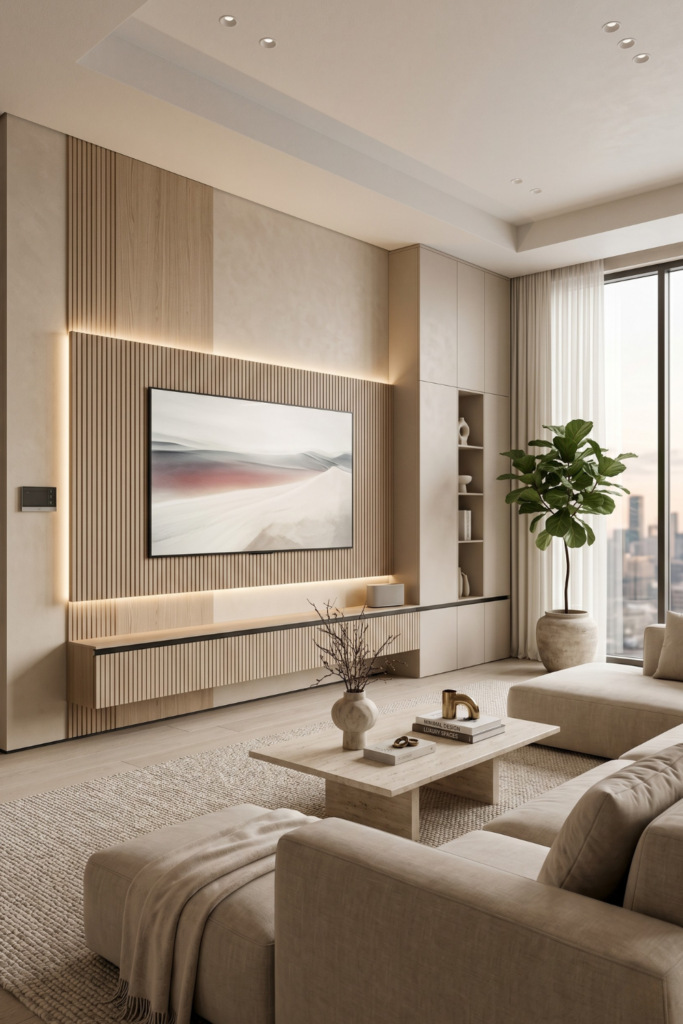
Modern minimalist living rooms often incorporate technology in a seamless way. Hidden cables, wall-mounted TVs, and sleek devices help maintain a clean and uncluttered appearance.
This works because visible wires and bulky electronics can disrupt the simplicity of the space. Keeping technology integrated ensures the design remains polished.
To achieve this, use cable management systems, choose slim-profile devices, and mount your TV on the wall.
Opt for furniture that accommodates electronics without making them the focal point. This keeps the room functional while maintaining its minimalist charm.
Conclusion
Creating a minimalist living room isn’t about removing everything, it’s about choosing what truly matters. By focusing on clean lines, neutral tones, natural materials, and intentional decor, you can design a space that feels calm, elegant, and effortlessly modern.
Whether you’re working with a small apartment or a larger home, these minimalist living room ideas help you create a space that feels more open, organized, and visually balanced. Start small, refine your choices, and enjoy the transformation into a home that feels both beautiful and peaceful every day.